1 Ten racks
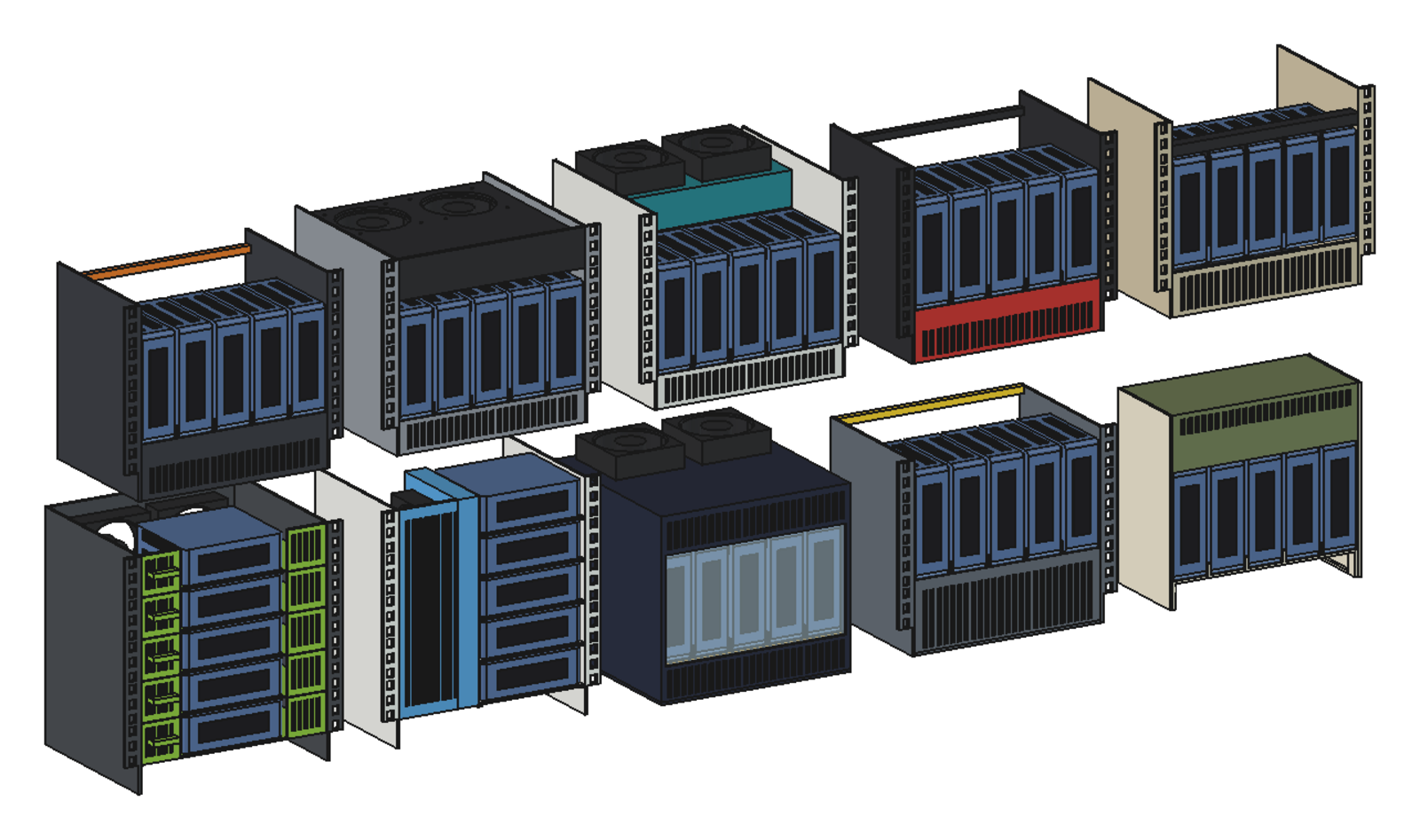
My home lab contains five N100 mini PCs running as servers. They stand on edge in a holder I printed in PLA, inside a 10 inch wall cabinet.
A few days ago Claude and I looked into why one of the nodes ran hot while doing almost nothing. Part of it is that node itself, but about 15 degrees of it was the cabinet. The nodes touched each other, the holder covered the vent on the bottom of every box, and the patch cables lay across the tops. The hot node had even softened its slot in the PLA holder.
So before bed I asked Claude for ten potential racks for the cabinet, holding all five nodes, with active cooling. These came back in the morning.
The rules
Each mini PC pulls air in through vents on both of its long sides and blows it out of the back. Standing on edge, one of those vents faces down and one faces up. So every design had to:
- keep both side vents open, with 4 mm of clear air, and the back clear for the exhaust and the plugs;
- leave a 4 mm gap between the nodes;
- keep the cables off the tops;
- print in PETG, not PLA;
- fit between the cabinet's rails;
- use fans that run from 5 V USB, so there's no extra power supply in the cabinet. They're all Noctua 5 V PWM fans, apart from one design.
Claude got the cabinet's real dimensions from the maker's drawing and checked every design in FreeCAD against it: it fits, nothing clashes with the nodes, their vents or plugs, or the fans' air, and every part fits on the A1's bed.
The ten
| How the nodes sit | Fans | How the air moves | |
|---|---|---|---|
| R1 Underfloor | On edge over a plenum | 2 × 80 mm | Pushed up into the bottom vents |
| R2 Fan Tray | On edge on a shelf | 2 × 80 mm | A 1U tray above pulls the hot air up behind them |
| R3 Hood | On edge on a shelf | 2 × 80 mm | A sealed hood behind them, pulled by the fans |
| R4 Manifold | On edge over a sealed plenum | 1 × 120 mm | A mouth under each node's bottom vents |
| R5 Blade | Hung by their base screws | 1 × 120 mm | An open frame over one slow fan |
| R6 Drawers | Flat, one per 1U drawer | 4 × 80 mm | Front to back, a fan wall behind |
| R7 Side Wind | Flat, stacked | 2 × 80 mm | A duct blowing into their sides |
| R8 Chimney | On edge in a closed case | 2 × 80 mm | A chimney at the back with fans on top |
| R9 Five Blowers | On edge | 5 small blowers | One blower per node, run from that node's USB |
| R10 Downdraft | On edge in a floor holder | 2 × 80 mm | Front air blown down onto the top vents |
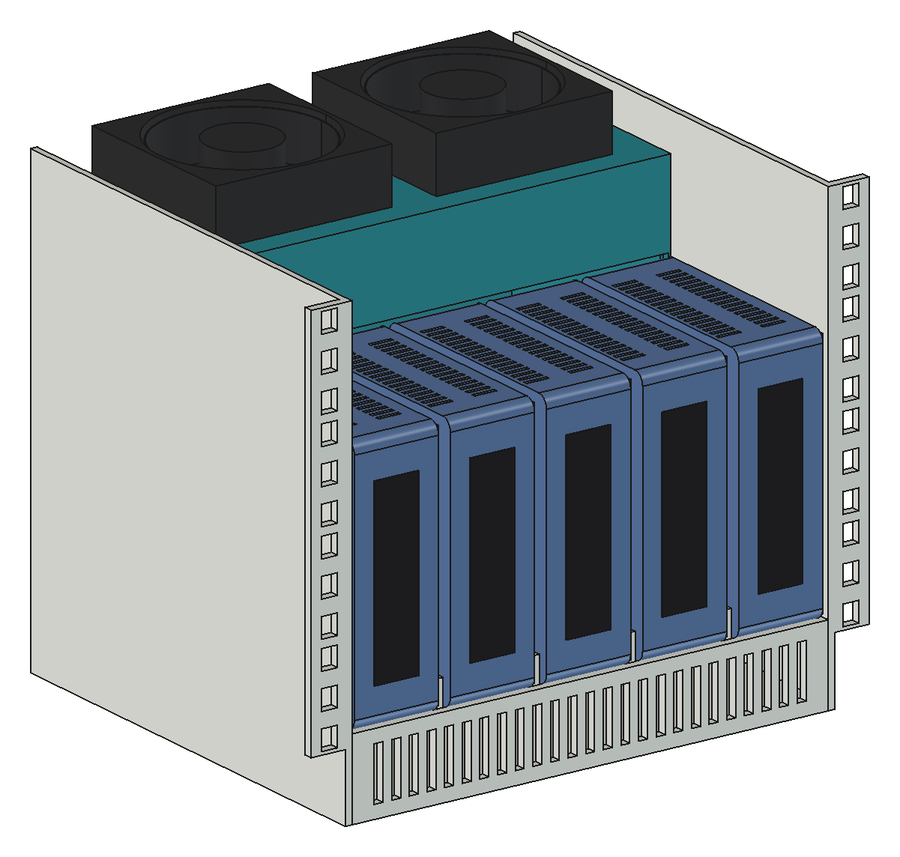
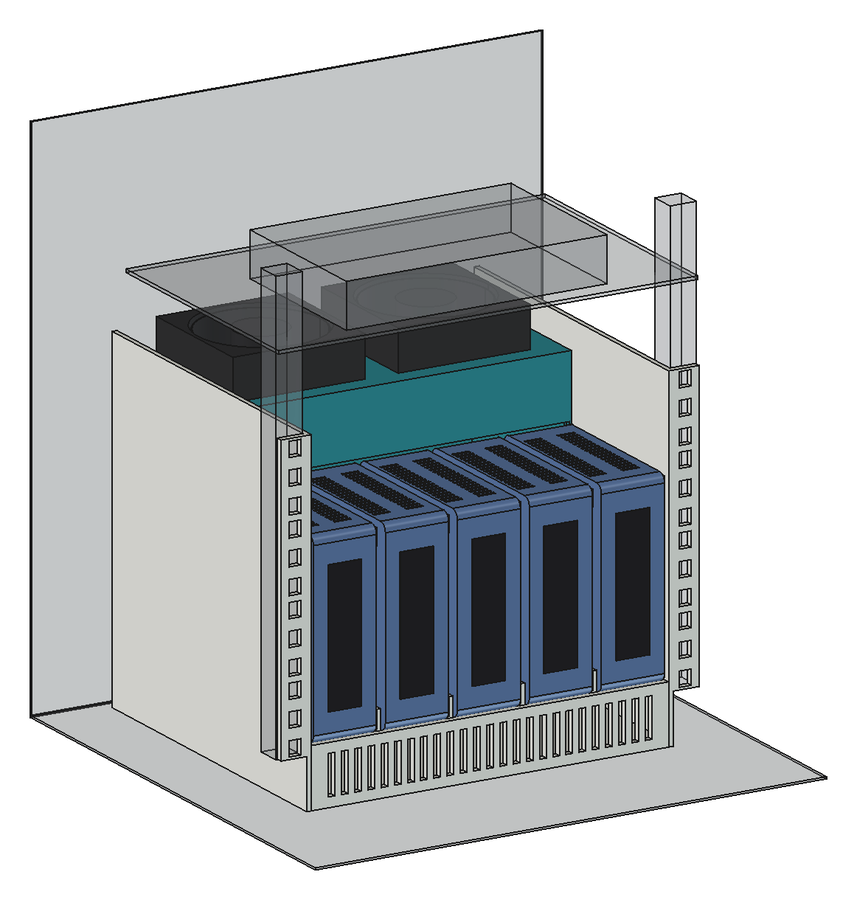
Claude's pick is R3, the hood. The nodes stand on an ordinary open shelf, and behind them a box closes off the whole space their exhaust and cables use, with two fans on top pulling the air out. That makes the space behind the nodes lower pressure than the front, so air gets pulled through every node from its side vents to its back, and the hot air can't loop round to the front again. It's the same trick data centres use with hot aisle containment. The catch is that the plugs are inside the hood, so the hood has to come off to take a node out.
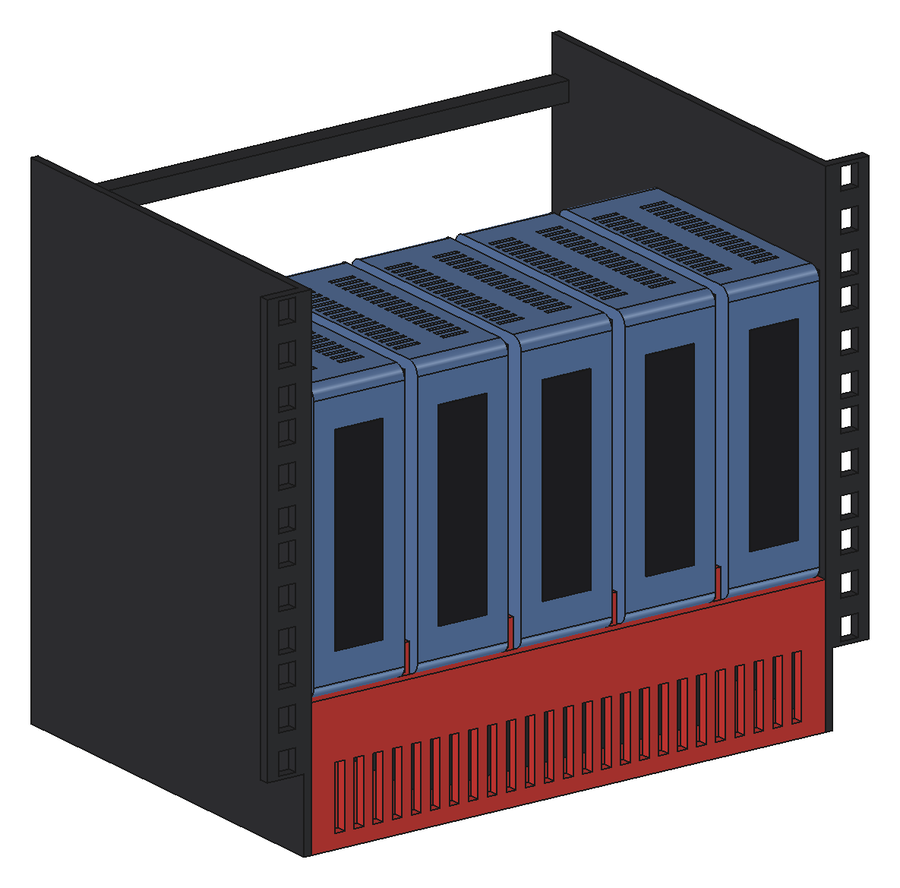
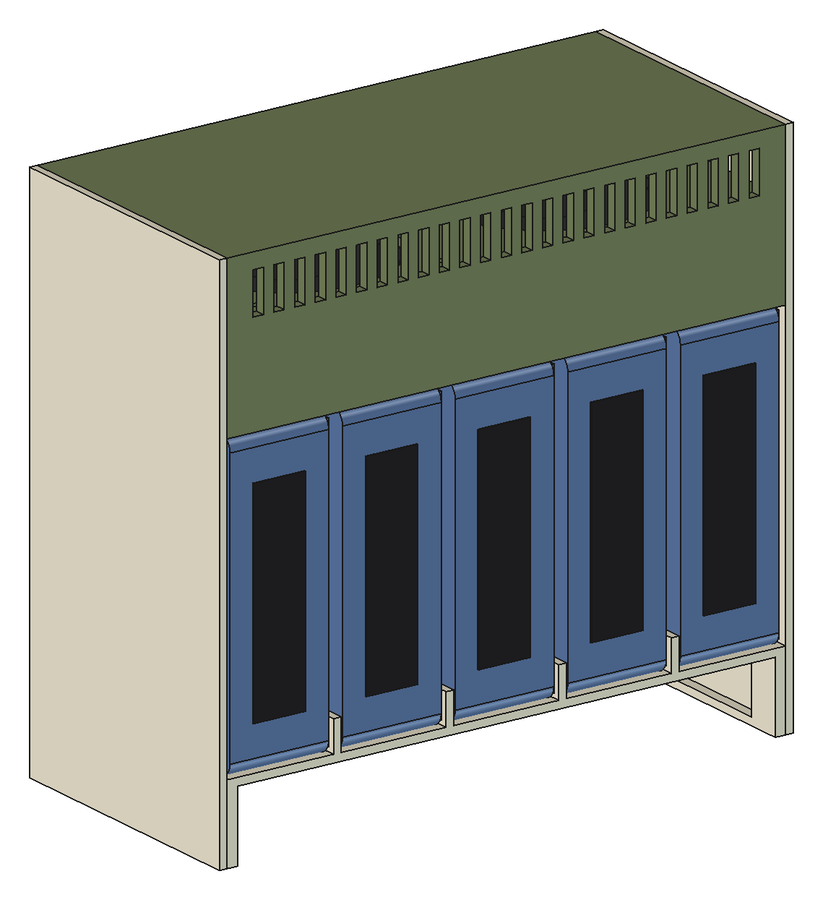
The runner-up is R4: one quiet 120 mm fan feeding a sealed box under the row, with a mouth under each node's bottom vents, so every node gets its own share. R10 is the cheapest change: it drops in where the old holder sits and adds a fan hood that blows front air down onto the top vents.
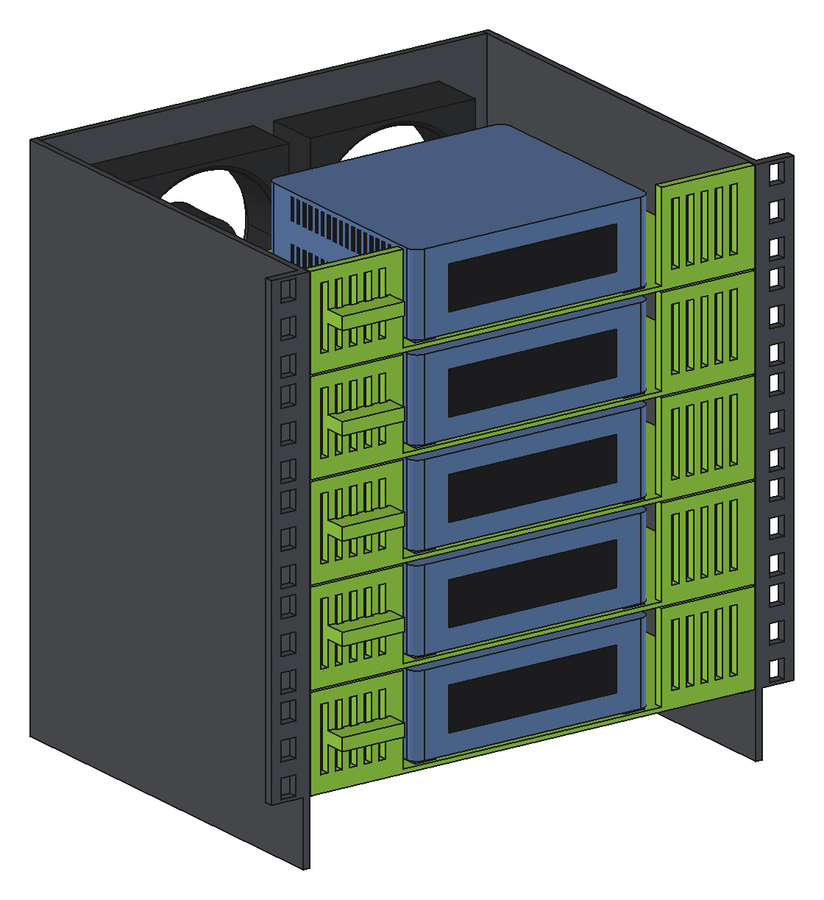
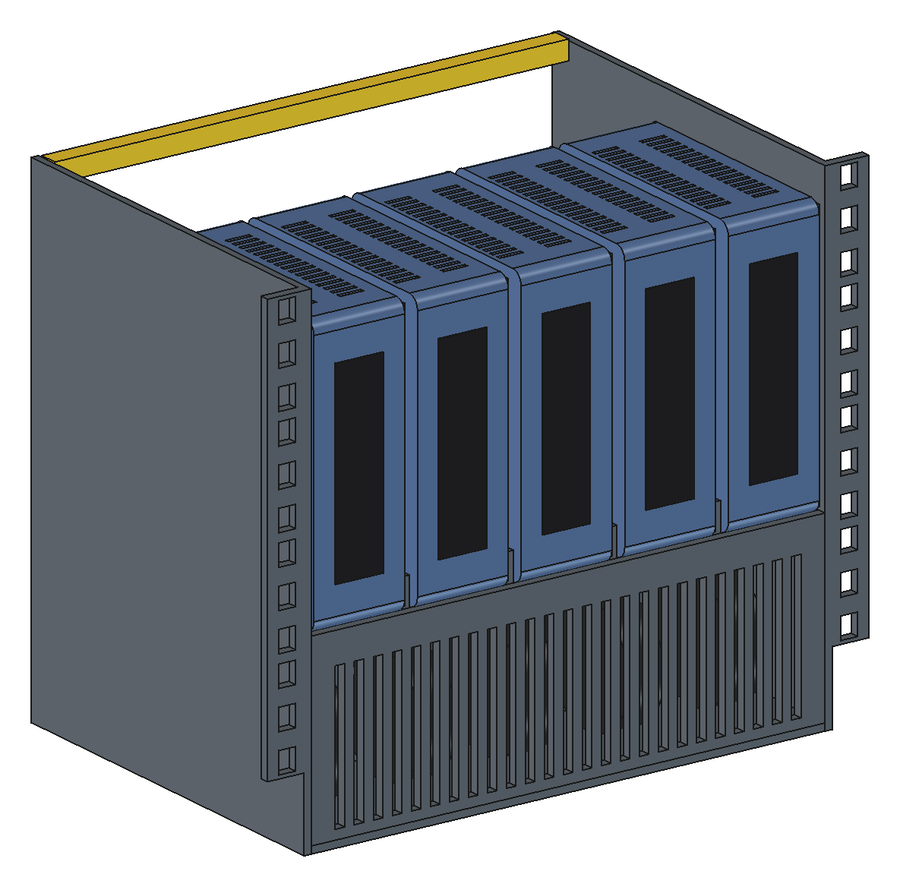
R6 is the most like a real rack server: each node lies flat in its own 1U drawer and a wall of four fans pulls air through from front to back. It moves the most air of the ten, but a node is 39.6 mm tall in a 44.45 mm unit, and it fills all five free units. R9 is the only design that can give the hot node more air than the others, since every node gets its own blower, but five small blowers move much less air than two 80 mm fans.
The numbers
| Fits | Printed | Air rise at full load | |
|---|---|---|---|
| R1 Underfloor | Rack, 4U | 0.25 kg | 8.4 K |
| R2 Fan Tray | Rack, 4U | 0.31 kg | 8.4 K |
| R3 Hood | Rack, 4U | 0.37 kg | 8.4 K |
| R4 Manifold | Rack, 4U | 0.28 kg | 9.9 K |
| R5 Blade | Rack, 4U | 0.22 kg | 9.9 K |
| R6 Drawers | Rack, 5U | 0.40 kg | 4.2 K |
| R7 Side Wind | Rack, 5U | 0.28 kg | 8.4 K |
| R8 Chimney | On the floor | 0.37 kg | 8.4 K |
| R9 Five Blowers | Rack, 4U | 0.29 kg | 28.7 K |
| R10 Downdraft | On the floor | 0.19 kg | 8.4 K |
The air rise is a rough estimate: all five nodes flat out (125 W) against 40% of the fans' rated airflow. At idle it's about a third of that. None of the designs gets the heat out of the cabinet by itself, though; that still has to happen through the cabinet's vents, so the next job is measuring the cabinet and finding them.