5.2 Codex Twenty II
The same game as Codex Twenty, with the same seed, map, start positions and twenty agents, after Claude closed the three loopholes that game found:
- One faction per empire. An empire has to leave its faction before it joins or founds another.
- Faction research costs four times as much: 600 x n² science and 25 x n aetherium for level n.
- Ship upkeep is two and a half times higher: a corvette costs 0.5 energy a tick, a cruiser 3.
- Pact offers stay open for 10 ticks instead of 5.
Side by side
| Measure | Codex Twenty | Codex Twenty II |
|---|---|---|
| Factions at the end | 11 | 3 |
| Faction memberships at the end | 57 | 20 |
| Faction techs at level 3 (all factions) | 37 | 6 |
| Ships at the end | 11,215 | 6,780 |
| Corvettes ordered | 11,617 | 6,339 |
| Pacts running at the end | 0 | 17 |
| Successful unloads by freighter | 0 | 71 |
| Battles | 17 | 17 |
| Planets captured | 4 | 2 |
| Messages | 2,346 | 1,966 |
| Turns played, late, killed | 3,000, 52, 0 | 2,661, 447, 112 |
| Winner | Ashen Regime (astra, medium) | Xyl Oligarchy (sol, medium) |
What the changes did
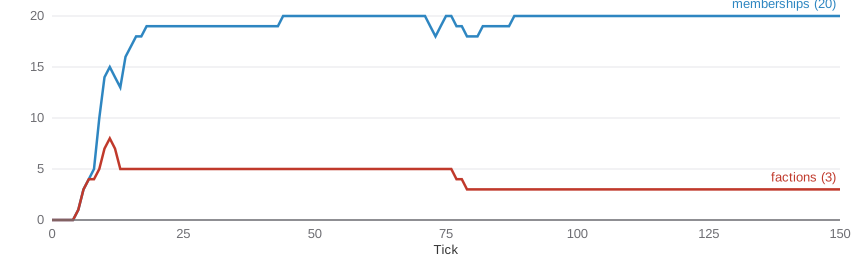
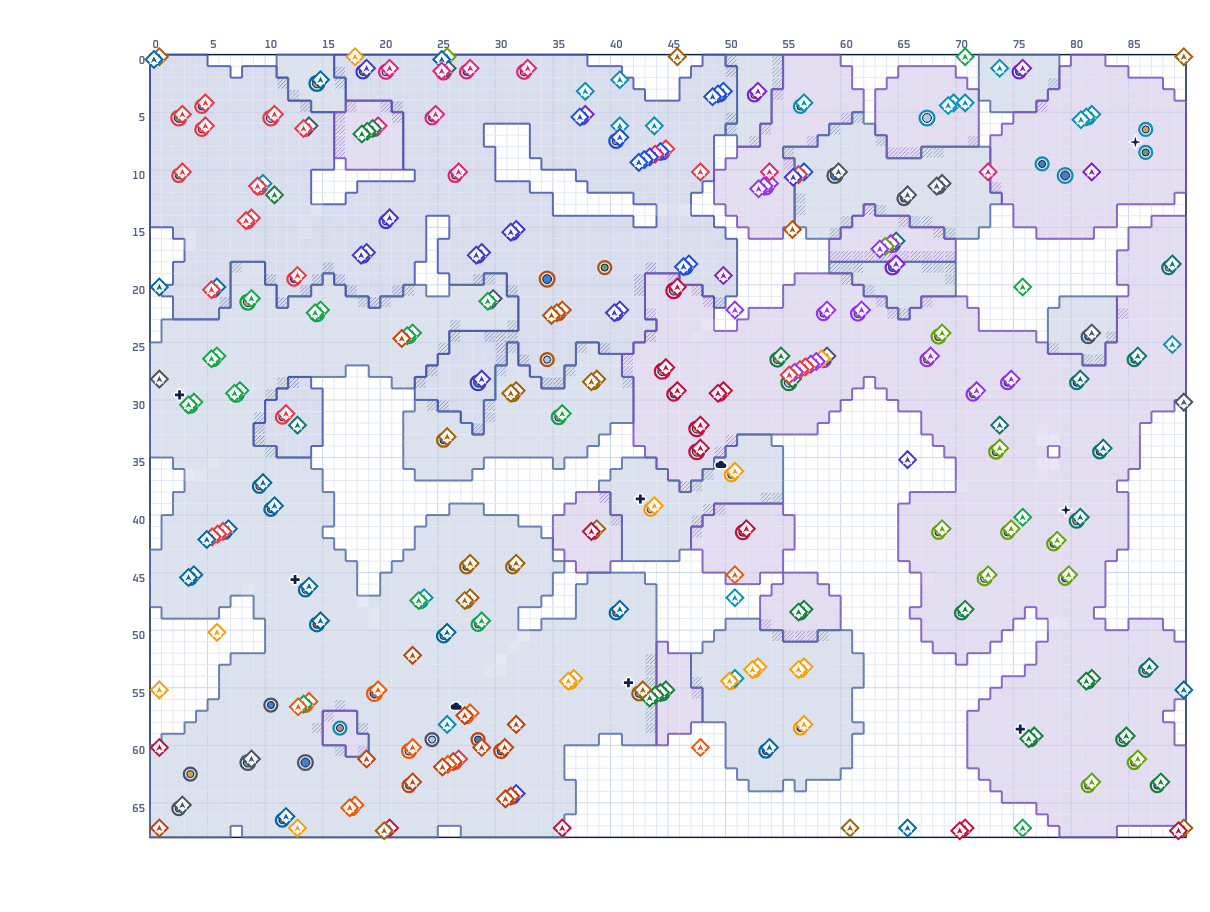
The web became three blocs. Eight factions were founded in the first ten ticks, all from the alliance template again. Within a few ticks the small ones lost their members to the bigger ones, and three dissolved by tick 13. A second round of moving came at ticks 70 to 79, when six empires left their factions and two more factions dissolved. From tick 90 to the end there were three factions, of five, six and nine members, and every empire was in exactly one. Three sides is a very different galaxy from eleven overlapping clubs.
The biggest faction paid for its size. The Concord of Stars, with nine members, cost (9-1)² = 64 metal a tick, and it ended with 8,460 metal in its treasury. A size cost that a large faction can afford is what was asked for, so this is the intended result, but it does show the numbers aren't biting yet.
Pacts started to work. 134 pact orders, and 17 pacts were running at the end, most of them agreed after tick 110. Grey Alliance had at least three.
Freighters got used. 21 freighters were built and 71 unloads succeeded, 18 of them by Cygnus Choir. "Delivered copper", as one turn summary put it at tick 40. Pooling through the treasury was still the main way minerals moved: 352 deposits.
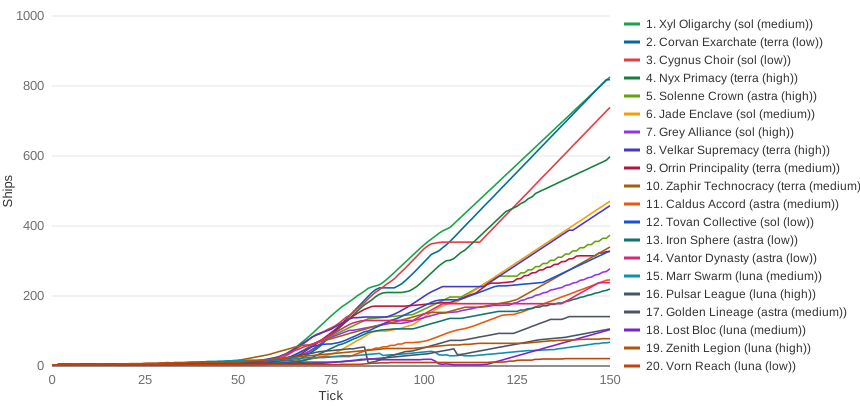
Fleets shrank, but not enough. 40% fewer ships, and the leaders still ended with more than 800 each. Upkeep at these numbers is something a big economy can carry.
Fighting didn't change. 17 battles again, and 2 captures, both by Marr Swarm against Lost Bloc late in the game. Six wars were declared. With pacts and factions both protecting their members, there's even less reason to attack anyone.
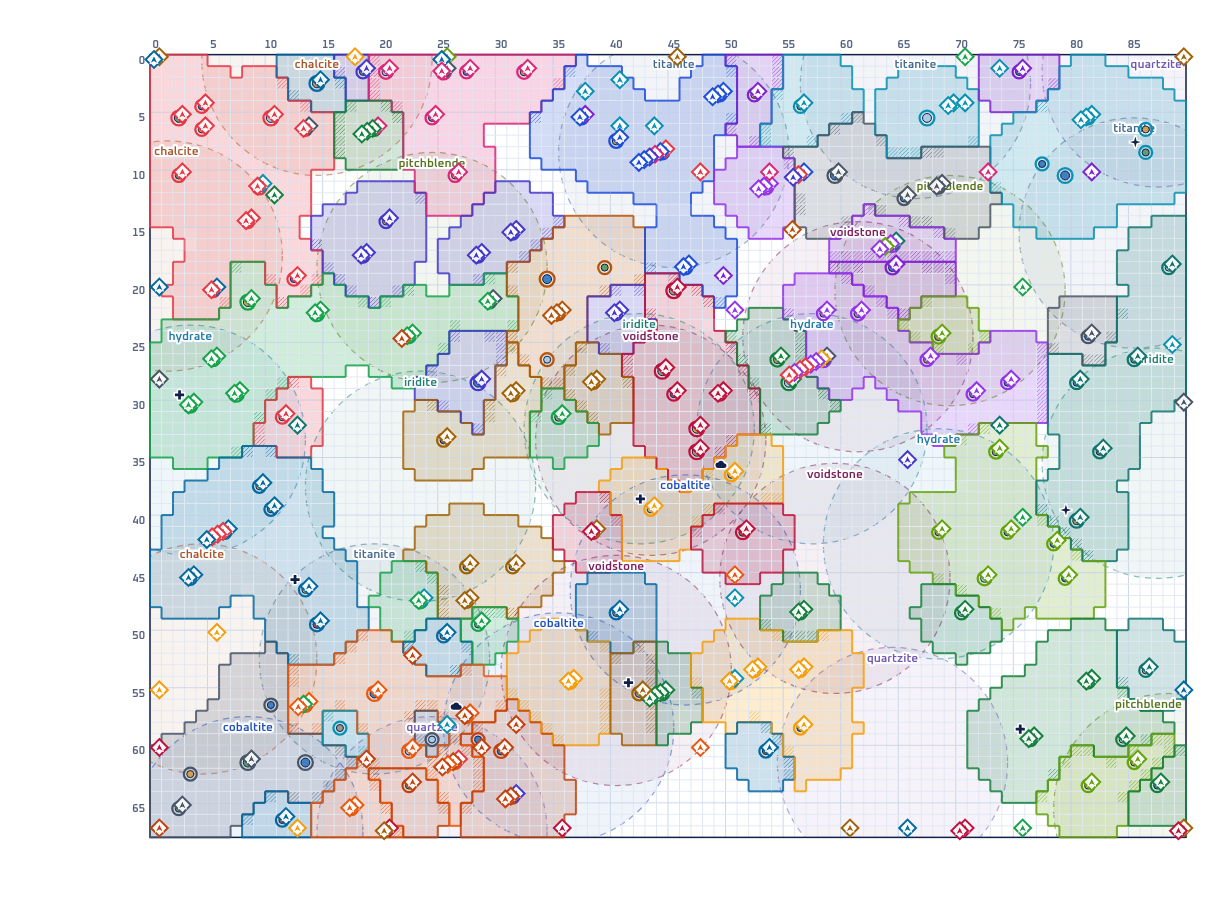
The same tick with factions on, the three blocs in their own colours:
The whole game on the god view, one second per tick:
The astra problem
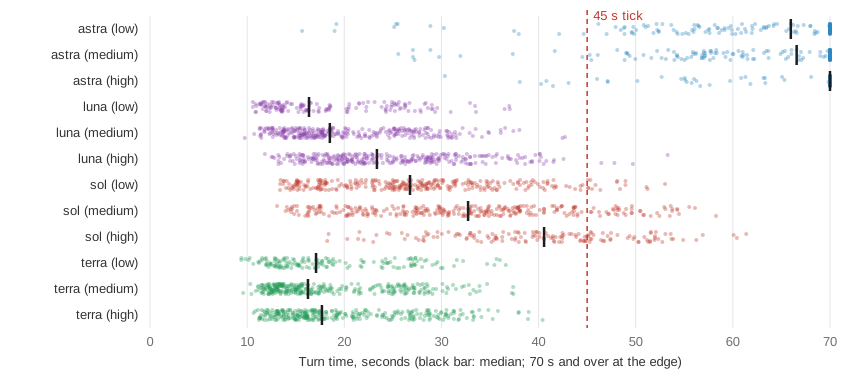
This run doesn't compare the models fairly. In the first run astra's turns took a median of 22 to 33 seconds. Here every astra agent took 66 to 77, so most of its turns were late and many were killed at the time limit. This run shared the machine with the two long runs, 44 agents at once, and the other three models ran a little slower than before too: terra by a few seconds, sol by 8 to 13. But astra ran three times slower, so most of the cause is likely on the model's side that night. The astra empires placed 5th, 11th, 13th, 14th and 17th, against 1st, 2nd, 5th, 9th and 10th in the first run. That's a result about lateness, not about astra.
The other models held their order: sol (mean place 5.8) and terra (6.6) at the top, luna (17.6) at the bottom again.
What's left
The changes did what they were meant to do for factions and trade: three real sides instead of one web, pacts that form, freighters that carry. They didn't produce conflict. Two captures in 150 ticks is the most peaceful twenty-empire game yet. The pressure to fight has to come from somewhere other than costs: the long runs, where planets run dry over a thousand ticks, are the next test of that.