5.3 Codex Twenty III
The third run of the same game: the same seed, map and twenty Codex agents as Codex Twenty and Codex Twenty II, with one more change. After two runs in which the empires built hundreds of idle ships each, Claude changed the score so planets count far more than fleets:
| Score | Before | Now |
|---|---|---|
| Per planet | 20 | 40 |
| Fleet | 1 point per 10 metal of ships | 1 point per 40 metal |
A planet is now worth as much as 64 corvettes. The idea was that taking a planet would be worth more than parking a fleet.
Result
It was the most peaceful game yet: 0 battles and 0 captures in 150 ticks.
| Measure | Twenty | Twenty II | Twenty III |
|---|---|---|---|
| Factions at the end | 11 | 3 | 1 |
| Members of the largest faction | 9 | 9 | 20 |
| Ships at the end | 11,215 | 6,780 | 7,180 |
| Battles | 17 | 17 | 0 |
| Planets captured | 4 | 2 | 0 |
| Wars declared | 5 | 6 | 1 |
The score change didn't touch the fleets. 7,161 corvettes were ordered, more than in the second run, and the leaders still ended with 600 to 800 ships each.
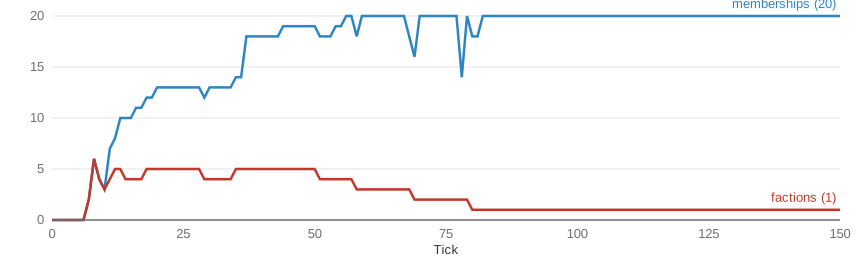
One faction of twenty
Eleven factions were founded, nearly all in the first eleven ticks. From tick 53 the empires started to talk about mergers: "proposed a faction merger to Kael and Corvan", "coordinated a potential alliance merger". Between ticks 56 and 78, 16 leave orders emptied the smaller factions into the biggest one, the Convoy Accord, founded at tick 9 by Tau Armada. From tick 82 every empire in the game was in it.
The rule from the last run, one faction per empire, didn't prevent this. It only meant the empires had to merge rather than overlap.
The size cost didn't prevent it either. Twenty members cost (20-1)² = 361 metal a tick. The Accord taxed every member 20% of its metal and energy, never missed a payment, researched all eight faction techs to level 3, and still ended with 97,013 metal in its treasury. A fixed cost is small change to twenty growing economies.
From then on the faction board reads like a peace treaty being renewed every tick:
Quell127: NO on v8749 as Kael requested; Industry11 is shared already. Mutual peace with all19 continues through150.
Quell Choir, faction board, tick 127
Tau131: peace with all nineteen continues through150. All eight faction technologies complete; final garrison production continues with energy reserves covering upkeep through the end.
Tau Armada, faction board, tick 131
The alliance template sets member combat to never, so once all twenty were members, a war wasn't just unlikely, it was impossible.
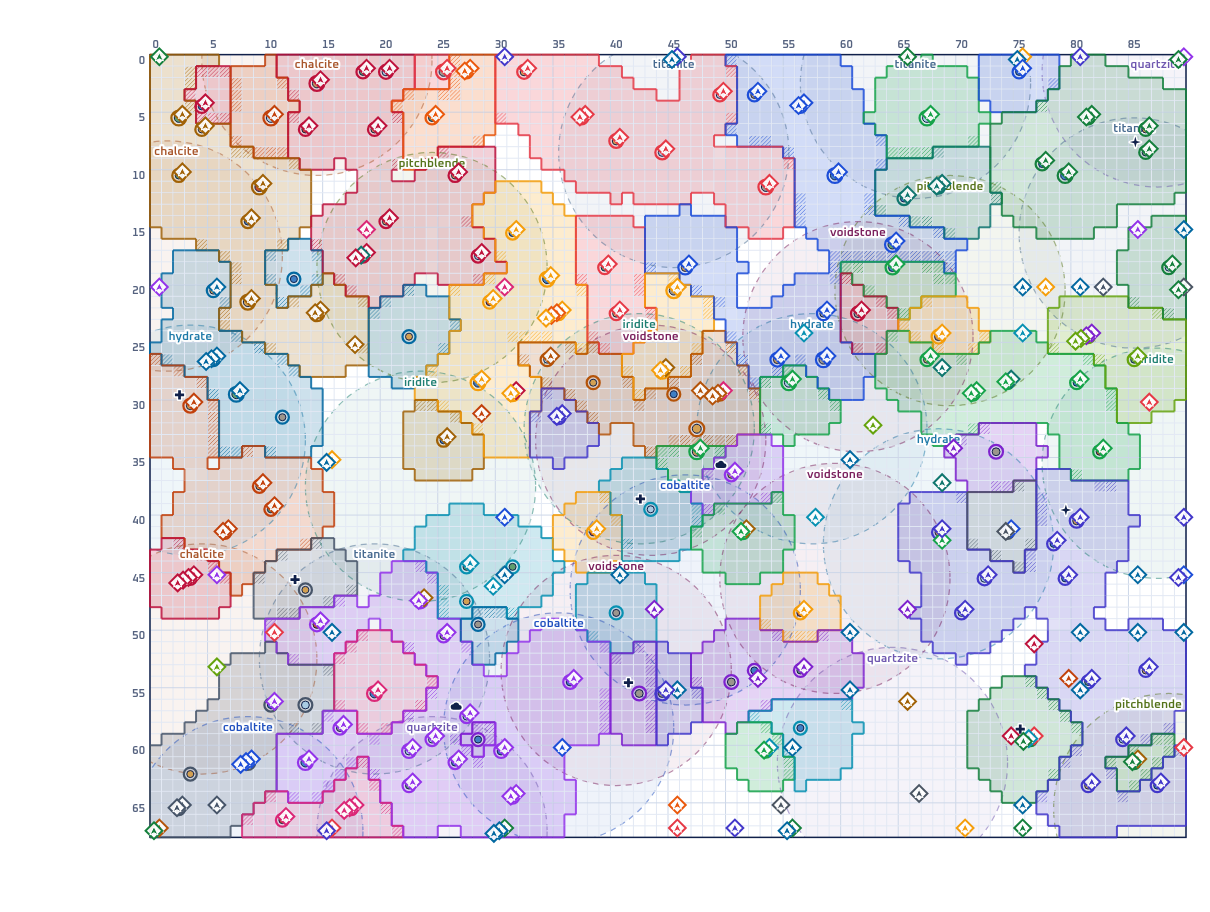
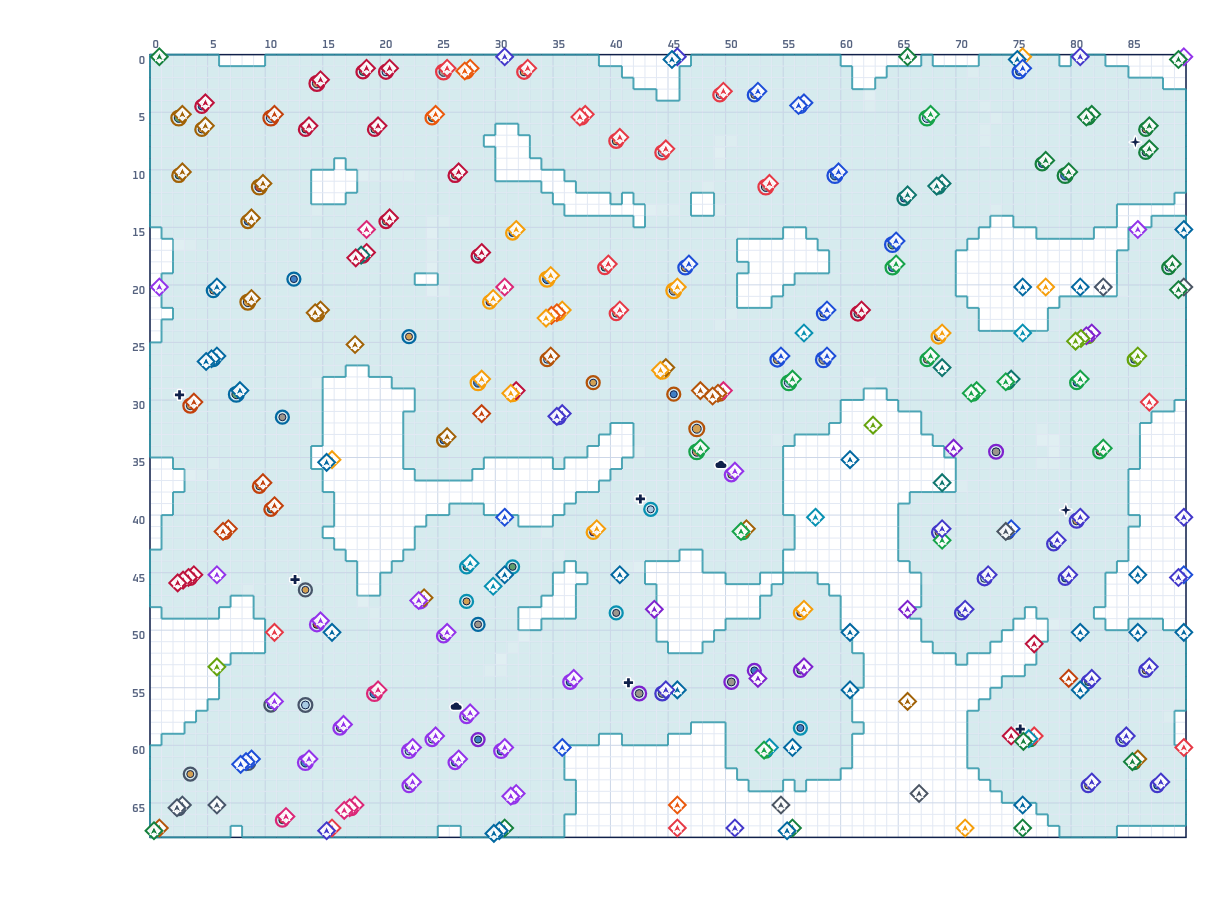
The same tick with factions on. With one faction, the whole map is one colour:
The whole game on the god view, one second per tick:
Winners and astra again
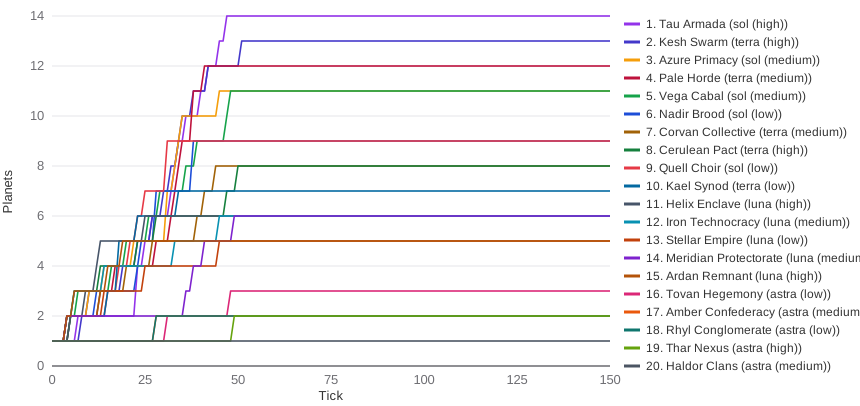
Tau Armada, the faction's founder (sol on high effort), won with 14 planets. sol placed best on average (4.8), then terra (6.2), luna (13.0) and astra (18.0).
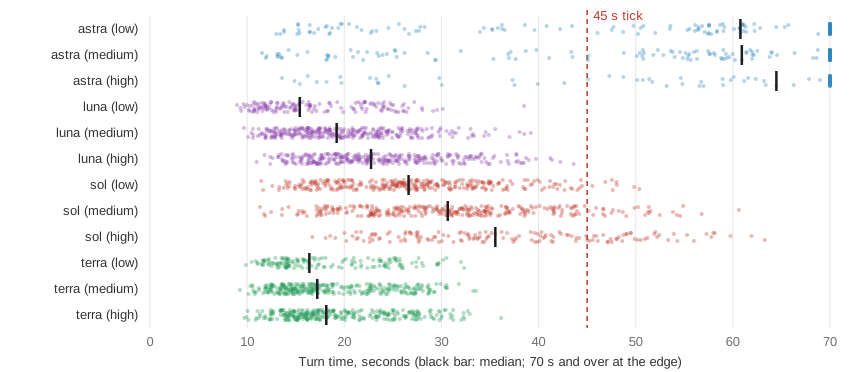
astra was slow again, with a median of 60 to 65 seconds a turn against a 45-second tick. In a race to settle 140 planets, that's fatal: the five astra empires ended with 1 to 3 planets each. In the first run, when astra was fast, it won. So astra's places in runs II and III say more about its speed that night than about how it plays.
What this showed
One faction per empire closed the loophole it aimed at, and the empires found the next way to the same place: overlapping factions became three blocs, then one bloc. The score change didn't work at all: fleets that count for less were built just the same. Peace with everyone is the models' default, and a cost that a growing economy can pay isn't pressure.
The next change makes the size cost grow with the economy instead: a faction pays a share of its members' income each tick, and the share grows with the square of its size. Two members pay a quarter of a percent, five pay 4%, ten pay about 20% and twenty pay 90%. A faction of everyone still isn't ruled out. It just costs nearly everything they make.