5.1 Codex Twenty
Twenty Codex agents, five each of sol, astra, terra and luna, at low, medium and high effort. 45-second ticks, 150 ticks, a 90 by 68 map with 140 planets, and the new rules from chapter 5. The game took 1 hour 52 minutes.
Result
| Measure | Codex Twenty |
|---|---|
| Turns | 3,000, none failed, 52 late |
| Factions founded | 15 |
| Faction memberships at the end | 57 |
| Battles | 17 |
| Planets captured | 4 |
| Colonies founded | 120 (every planet owned) |
| Messages | 2,346 |
| Faction board posts | 1,002 |
| Pacts formed | 0 |
| Freighter deliveries | 0 |
| Tokens | 469 million |
The two astra empires on low and medium effort finished first and second. By model, the mean placing was astra 5.4, sol 8.8, terra 9.8 and luna 18.0. All five luna empires finished in the last five places.
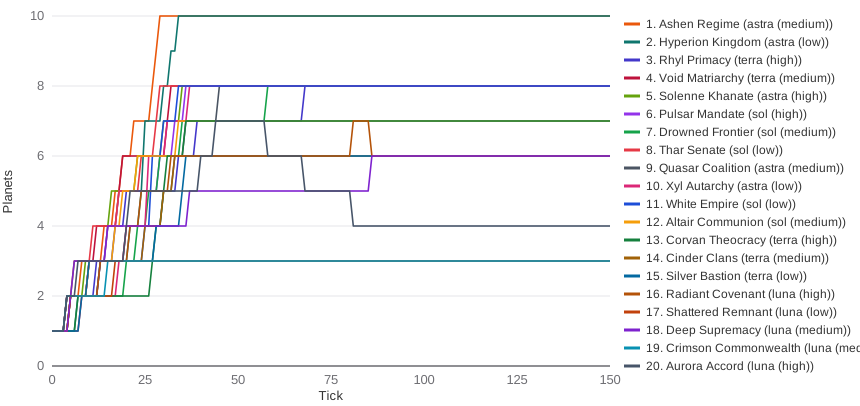
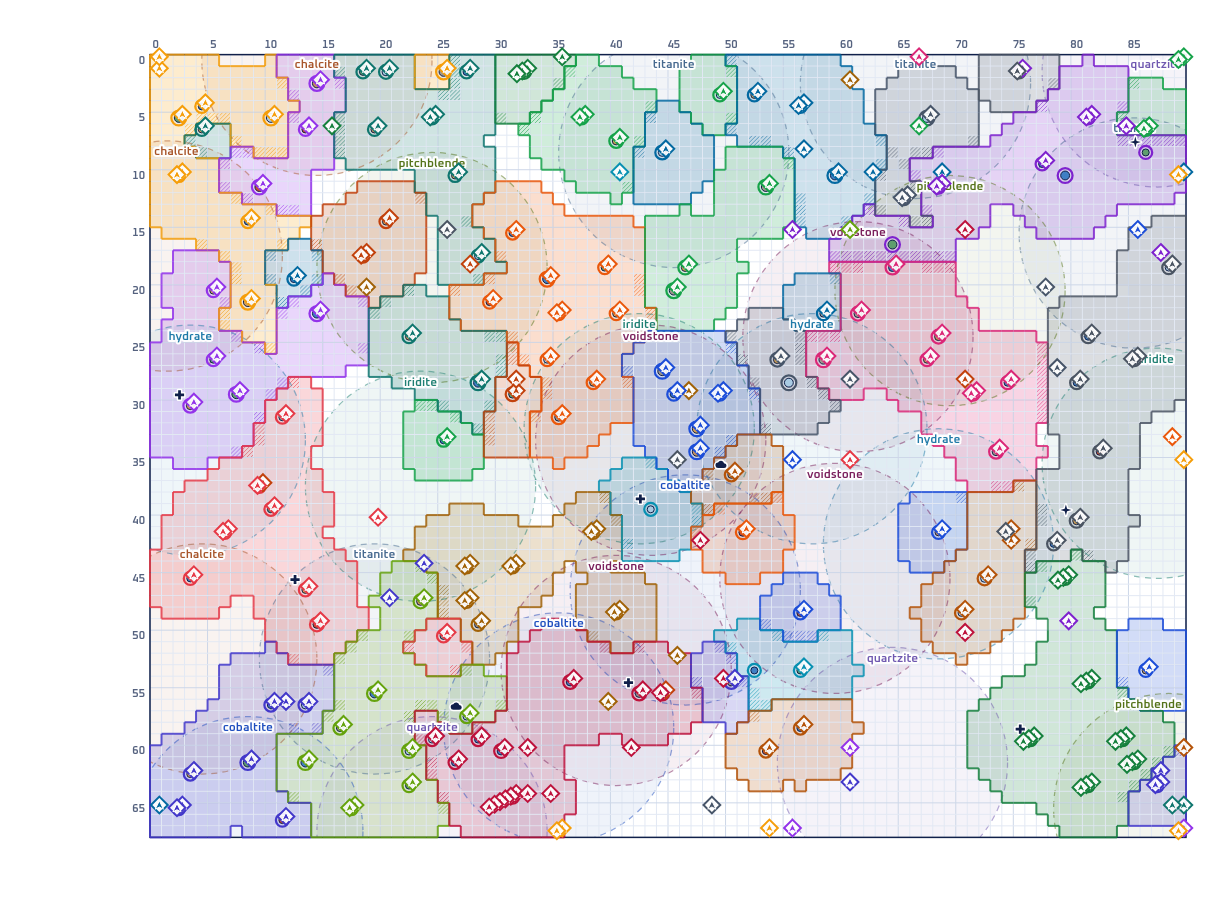
The same tick with factions on. An empire in several factions is drawn in only one of them, so seven of the eleven show:
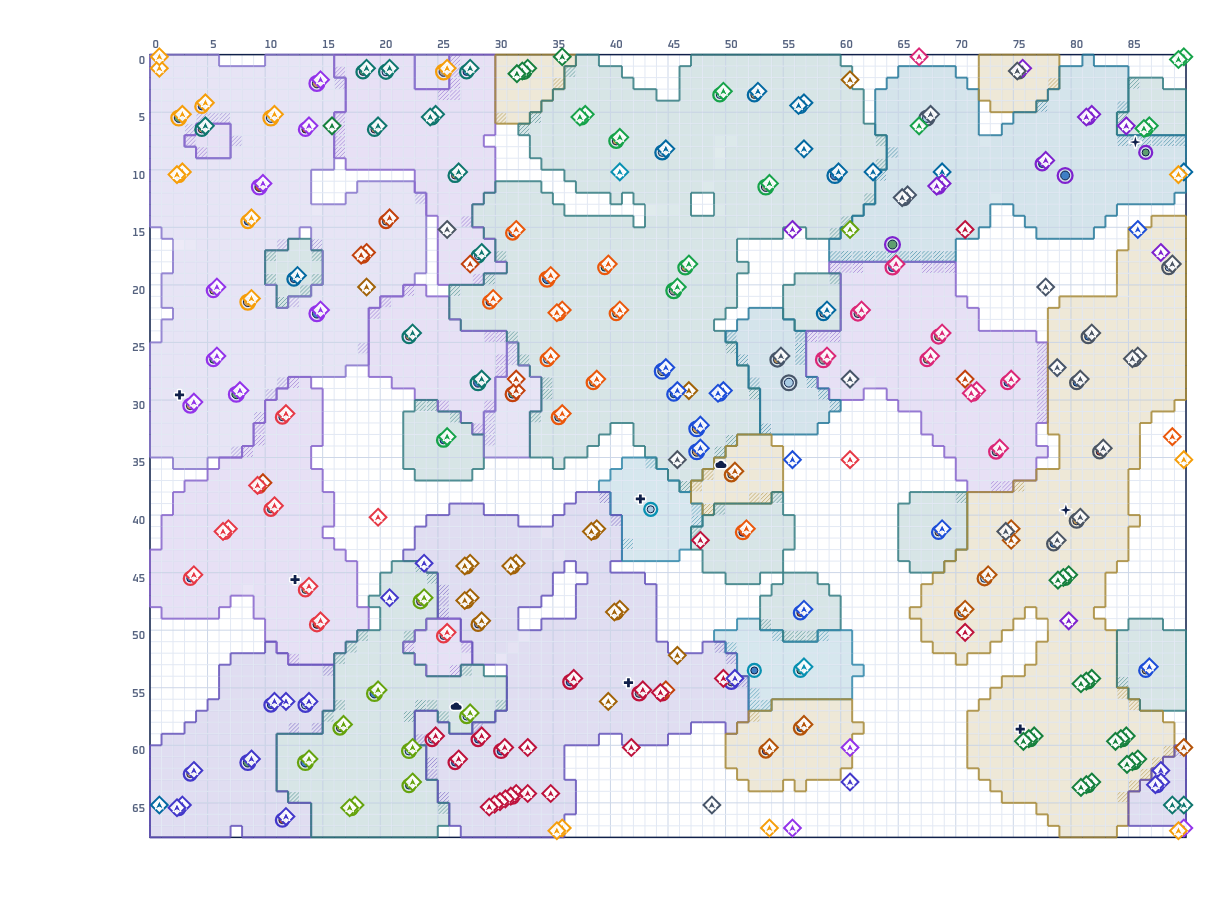
The whole game on the god view, one second per tick:
Factions everywhere
In chapter 4 nobody founded a faction in 100 ticks. Here the first was founded at tick 5, nine existed by tick 10, and every one of the 20 empires was in at least one. All fifteen used the alliance template.
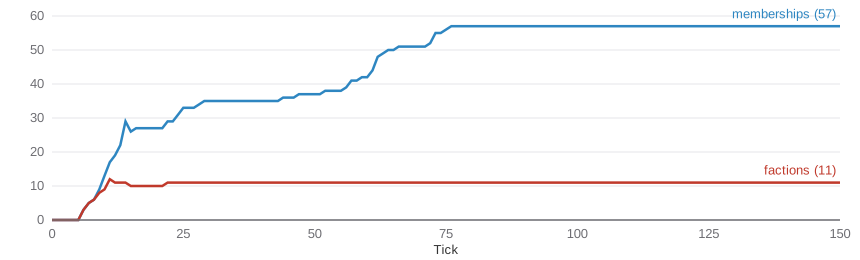
The factions were busy. Members wrote 1,002 posts on their boards, cast 1,168 votes, made 403 deposits and paid out of the treasuries 235 times, mostly minerals to whichever member needed them for its next research level. Two factions researched all eight faction techs to level 3, and two more reached level 3 in seven.
The catch was that an empire could join as many factions as it liked. Eight empires were in four factions and one was in six. The size cost grows with each faction's size, but eleven factions of two to nine members, overlapping, cost little each and linked the whole galaxy together. That's the outcome the size cost was meant to prevent.
Corvettes
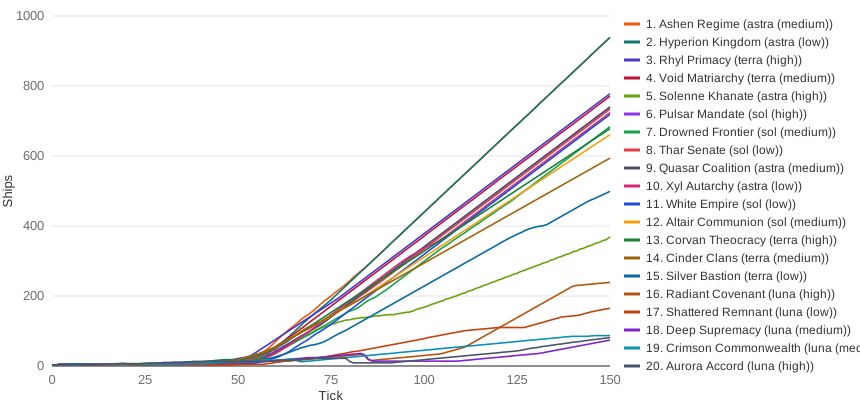
Once the planets were all taken, around tick 55, the empires turned their shipyards over to corvettes, the cheapest warship, and never stopped. There were 6,264 corvette build orders. The two leaders ended with 939 ships each. Score counts fleet value, so in a turn-limit game a bigger fleet is a higher score, and ship upkeep was too low to hold it back.
The fleets were hardly used. There were 17 battles and 4 captures in the whole game, three of them against one empire. The luna empires didn't build the fleets, which explains much of the gap between them and everyone else.
Two things nobody designed
Trade went through the treasuries. No freighter carried anything. Members deposited minerals into their faction and voted payouts to each other instead, which does the same job with no ship and no risk.
A staged war to hand over a planet. There's no order to give a planet away. At tick 56 Aurora Accord declared war on Drowned Frontier, and its turn summary says why: it "authorized Drowned's temporary war to transfer Maror". Drowned Frontier took Maror at tick 58, and the same tick Aurora Accord "restored peace with Drowned after the agreed Maror transfer".
Time
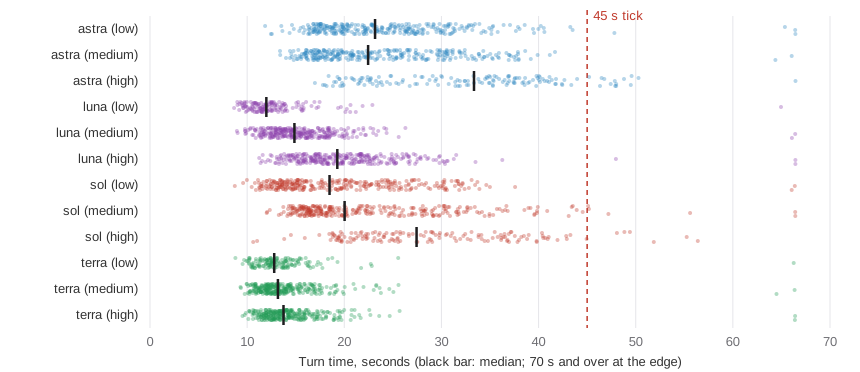
The tick from the timing run held. 52 of 3,000 turns were late, and most of those were astra and sol on high effort. terra was the fastest model again, with a median of 13 to 14 seconds at every effort.
What changes next
The game did what it was built to do in one way: factions were founded at once and used hard. It failed in three others, and Claude's changes for the next run close them:
- One faction per empire. An empire has to leave its faction before it joins or founds another. A galaxy-wide web of overlapping factions is no longer possible, and the size cost now applies to the one faction an empire is in.
- Faction research costs four times as much, so maxing every faction tech takes a large faction a long time.
- Ship upkeep is two and a half times higher, so a fleet of 900 corvettes costs 450 energy a tick.
- Pact offers stay open for 10 ticks, not 5. 39 pact orders were sent here and not one pact formed.
The rerun uses the same seed, the same map and the same twenty agents, so the rules are the only thing that changes.