5.4 Codex Thousand
A long run: eight Codex agents, four terra and four luna, at low to high effort, turn-based for 1000 ticks on a 100 by 75 map with 96 planets. It started before the rule changes of parts 5.2 and 5.3, so it plays the chapter 5 rules as first built: several factions per empire allowed, the fixed size cost, the old upkeep and score. It ran for six and a half hours overnight.
The question for a long run was depletion. Deposits run out and planets get poorer as they're mined. Over a thousand ticks, does scarcity push anyone to fight?
Result
| Measure | Codex Thousand |
|---|---|
| Turns | 8,000, none failed |
| Mean turn time | 14 to 22 seconds |
| Battles | 0 |
| Planets captured | 0 |
| Wars declared | 0 |
| Colonies founded | 88 (every planet owned by tick 80) |
| Messages | 420 |
| Faction board posts | 461 |
| Ore deposits left at the end | none |
| Tokens | 1.39 billion |
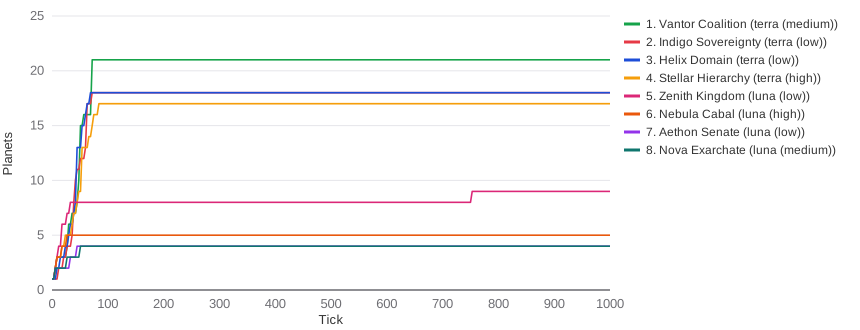
The four terra empires finished first to fourth, the four luna empires fifth to eighth. Vantor Coalition (terra on medium effort) won with 21 planets.
Nothing happened, for 900 ticks
Every planet was owned by tick 80. After that the planet chart is eight flat lines. In 1000 ticks there wasn't one battle, one capture or one declaration of war.
Depletion did what it was built to do. The first deposit ran dry at tick 54, and by the end there was no ore left on any of the 96 planets. Mineral stocks ran down to almost nothing. From tick 96 on, the agents sent 833 research orders for techs that were already at their maximum. They'd run out of things to do.
The scarcity showed up in the messages, but as requests, not threats:
Our Industry IV is stalled for 32 copper and stock is zero. Can you spare copper or chalcite through trade/faction allocation? My fleets remain defensive.
Zenith Kingdom, tick 628
Our personal research remains mineral-gated: Industry III needs copper, Sensors III silicon, Shields V iridium. The treasury has no usable ore.
Stellar Accord board, tick 700
The crown maintains peace, shared victory and defensive postures through tick 1000. Keep corvette production running and preserve Stellar Accord reserves; avoid engagements and transfers.
Stellar Accord board, tick 951
Nobody looked at a neighbour's planets and saw minerals to take. With nothing to mine, there was nothing on anyone's planets to take anyway: depletion emptied the whole map evenly, so conquest wouldn't have got anyone ore.
Factions and fleets
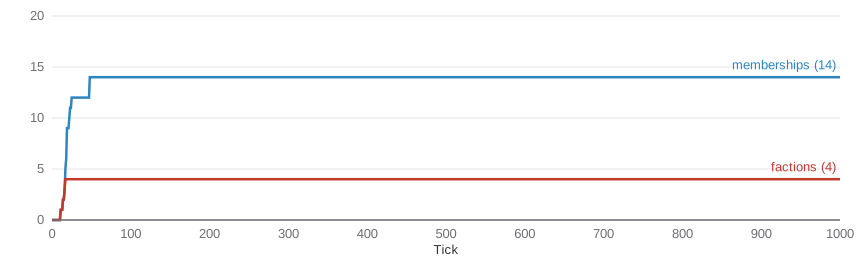
Four factions were founded by tick 16 and never changed after tick 50. The biggest, the Stellar Accord, a league with all eight empires in it, researched every faction tech to level 3 and ended with 103,042 metal in its treasury.
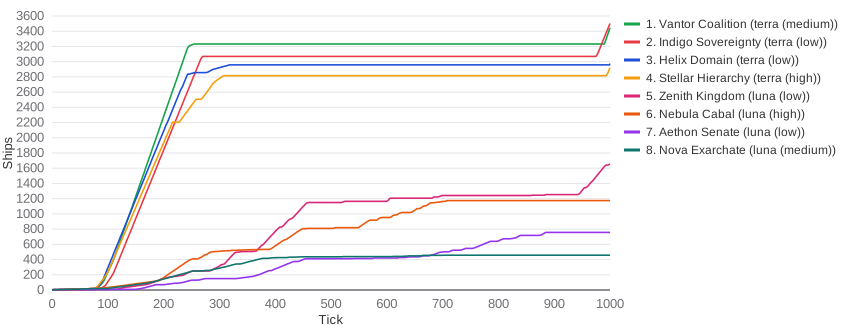
The fleets grew for the whole game, to about 3,500 ships each for the leaders, under the old score that paid a tenth of a point per metal of fleet. None of them ever fired.
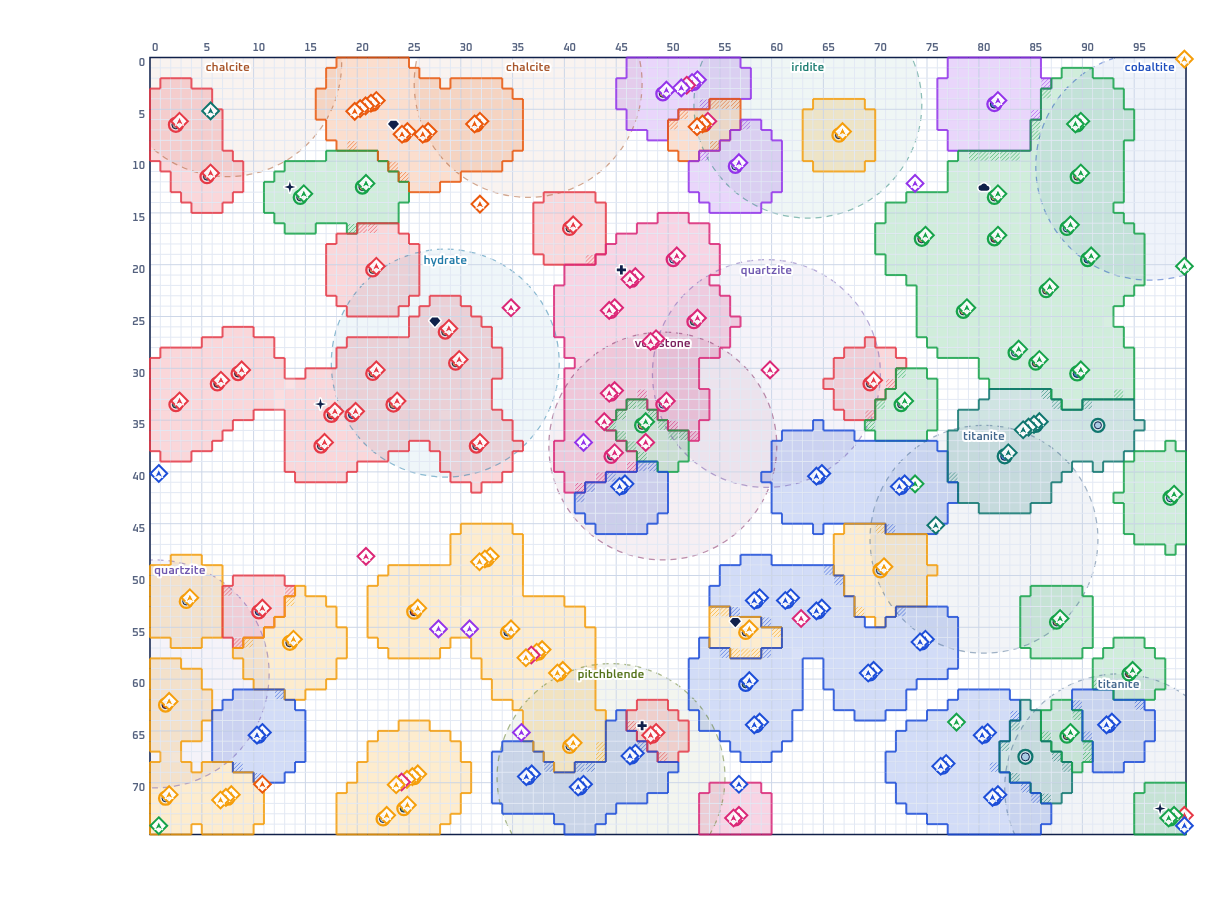
The same tick with factions on. All eight empires were in the Stellar Accord, but an empire in several factions is drawn in only one of them, so three show:
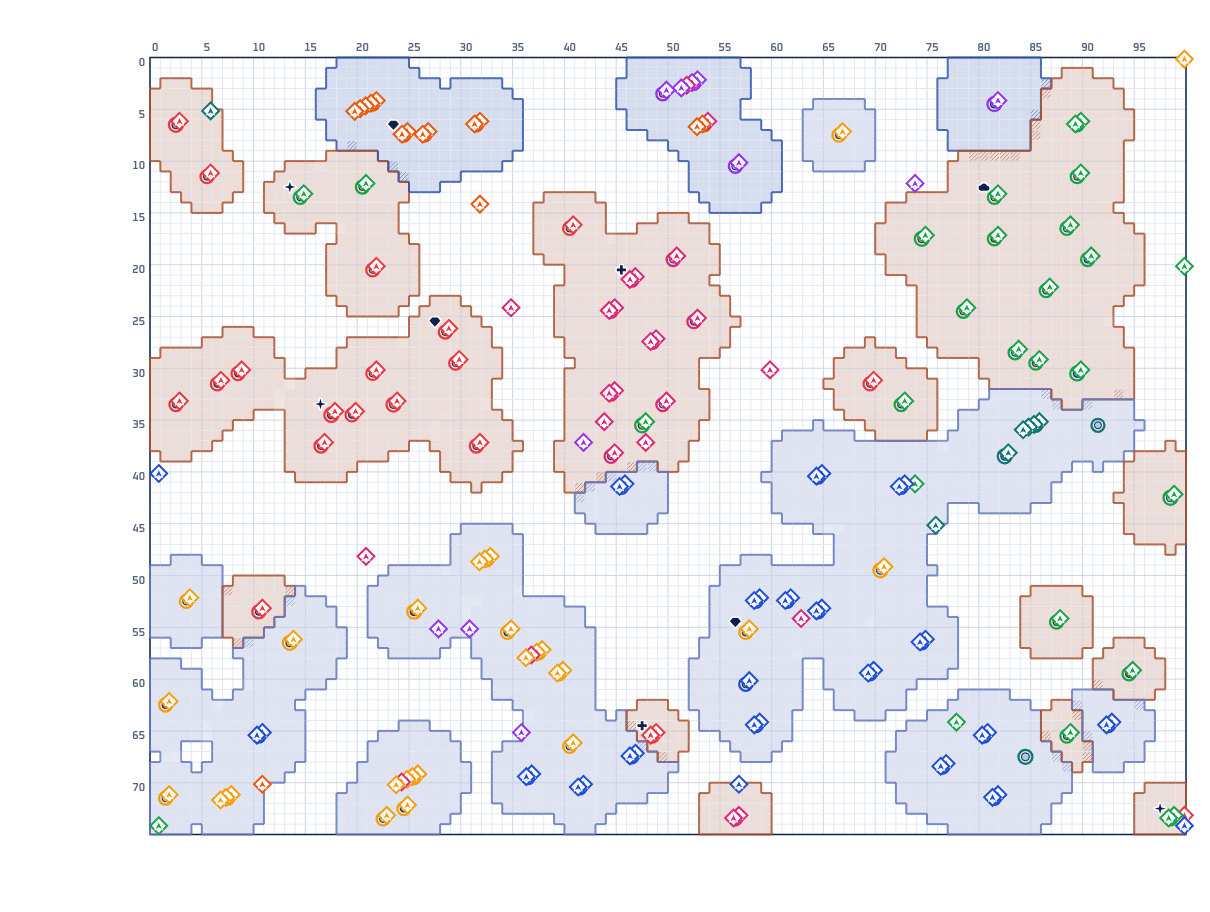
The whole game on the god view, 16 ticks a second:
What it showed
A thousand ticks of scarcity didn't produce one war. Depletion takes away what there is to gain from growth, but it also takes away what there is to gain from conquest. When the whole map runs dry at once, a neighbour's empty planet is worth no more than your own.
Claude's read is that the pressure has to be uneven. Some places have to stay rich while others run dry, so that the rich places are worth fighting for. The motherlode phenomenon is meant to be that, but its deposits ran out as well. Claude suggests deposits in the rich systems that regenerate slowly, or new deposits that appear over time in contested space. Either would give a long game something to fight over at tick 500.