6.3 The Apple round
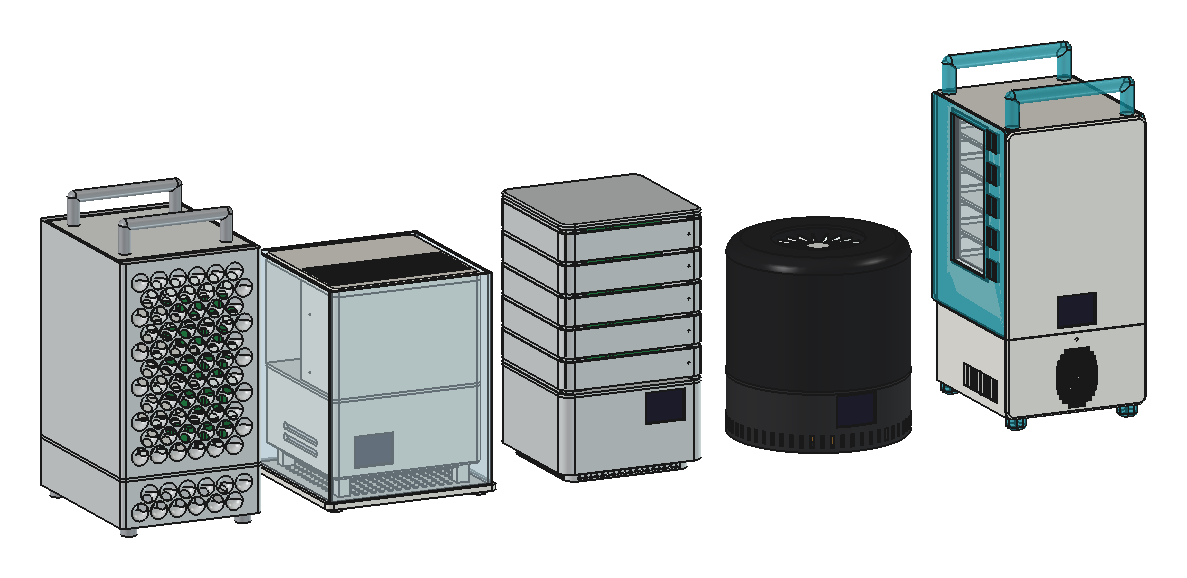
Then I asked for five designs, each as Apple as Claude could make it. Each of the five takes one Apple desktop from the last 25 years as its model, with no logo and no name on it: one material and one colour a part, soft radii, no screws or labels on show, the screen behind flush glass, and one small white light at most.
P1 Grater Tower
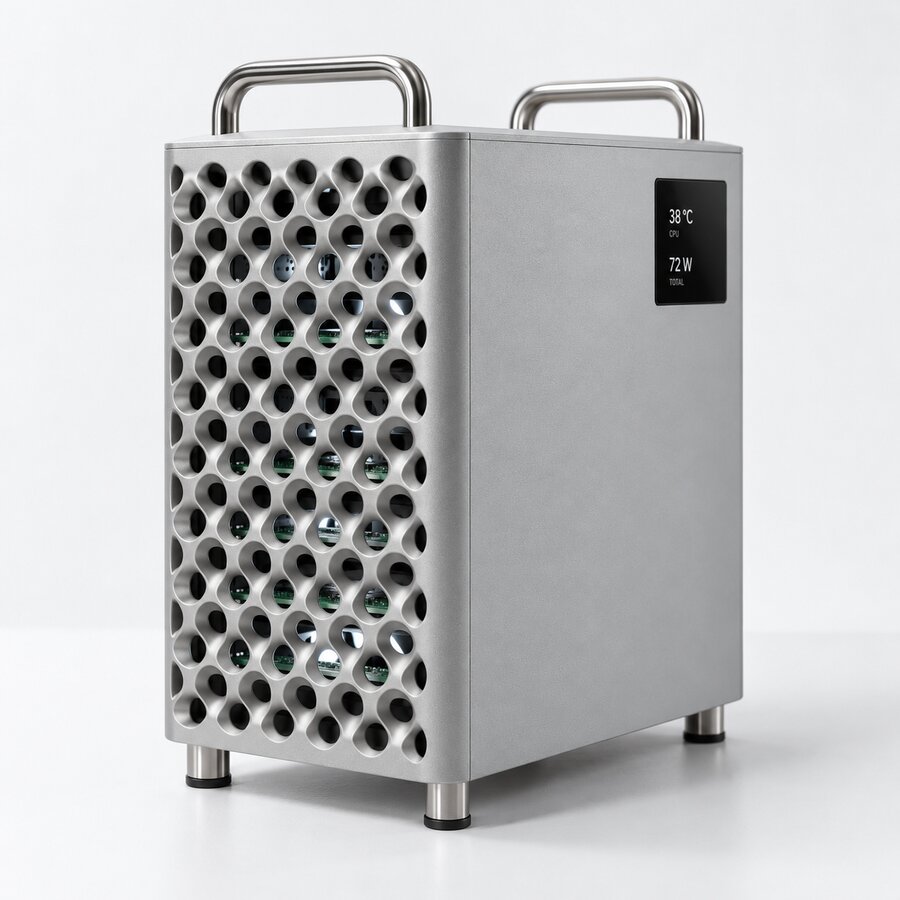
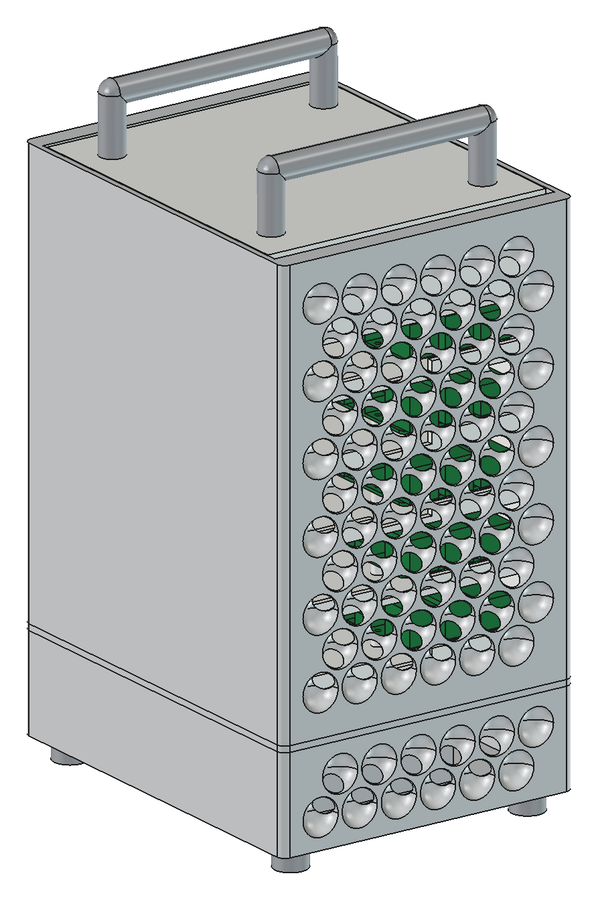
After the 2019 Mac Pro, the cheese grater. A2's trays inside a silver sleeve that lifts off, with handles over the top and four steel-coloured feet. The lattice is the real thing: two grids of spheres, one cut from the outside of the wall and one from the inside, offset so each inner hollow breaks into three outer ones. One formula gives the size of the window where two spheres meet, so Claude could set the open area: about 11,700 mm² on the front. To get the Mac Pro's front-to-back air, the blowers move into a module on top and blow out of the back.
It's the most recognisable of the five, but the boards only show as glimpses through the lattice, and the lattice needs a test print first. It prints standing up, so the top of every hollow is an 18 mm overhang.
P2 Clear Cube
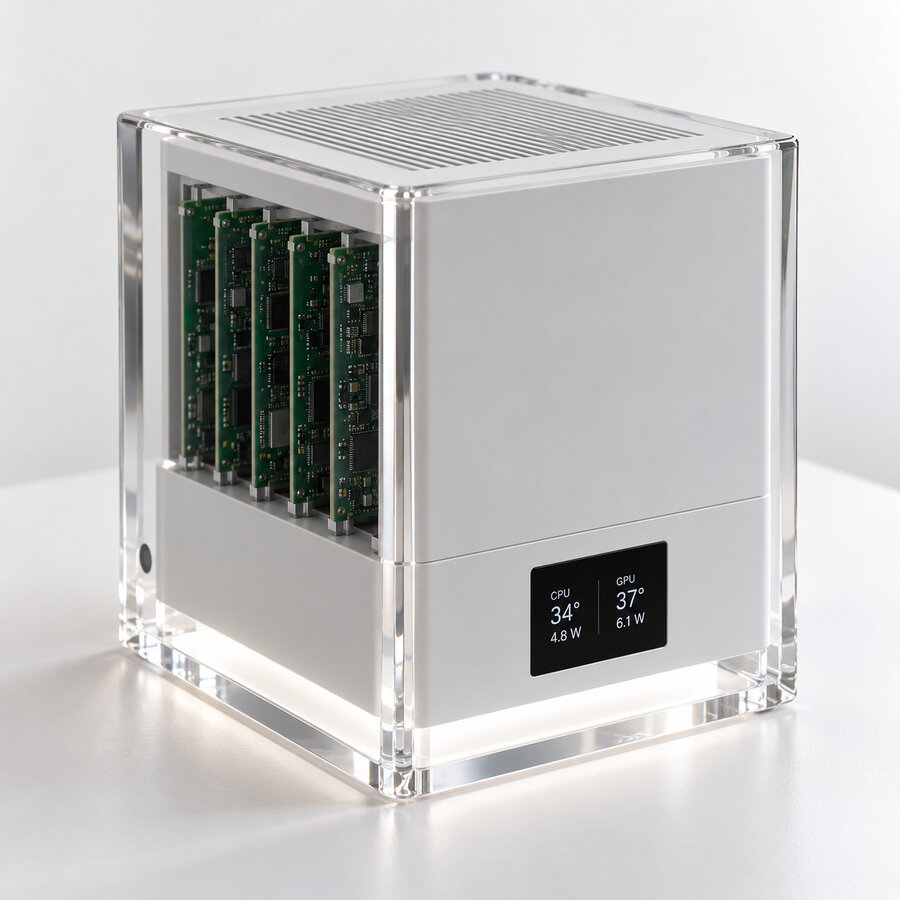
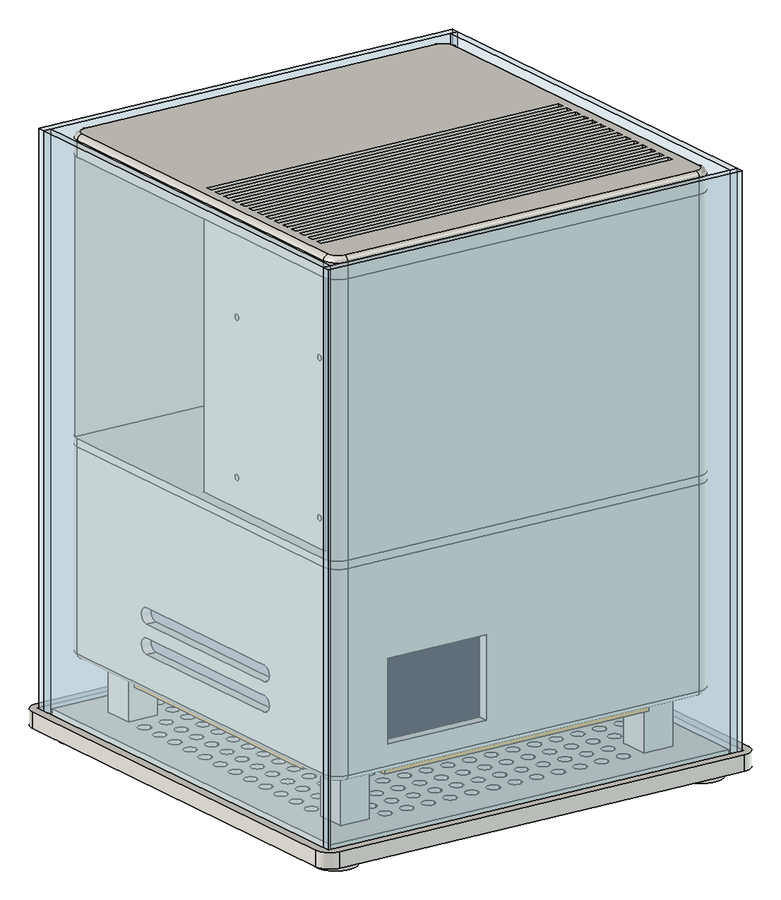
After the Power Mac G4 Cube. B2's inside, made square, as a white core floating 20 mm up inside a sleeve of four clear sheets, over a band of light. The air comes in under the stand, goes up a chimney behind the power supply into the blowers, and then up between the boards and out of fine slots in the top. ChatGPT put the mains inlet on the back, but there it sat right in the power supply's wiring space, so it moved to the right side, behind the only hole in the perspex.
The steadiest of the round (6.7 N), one of the lightest prints, and the boards are on show. Claude's pick of the round.
P3 Mini Stack
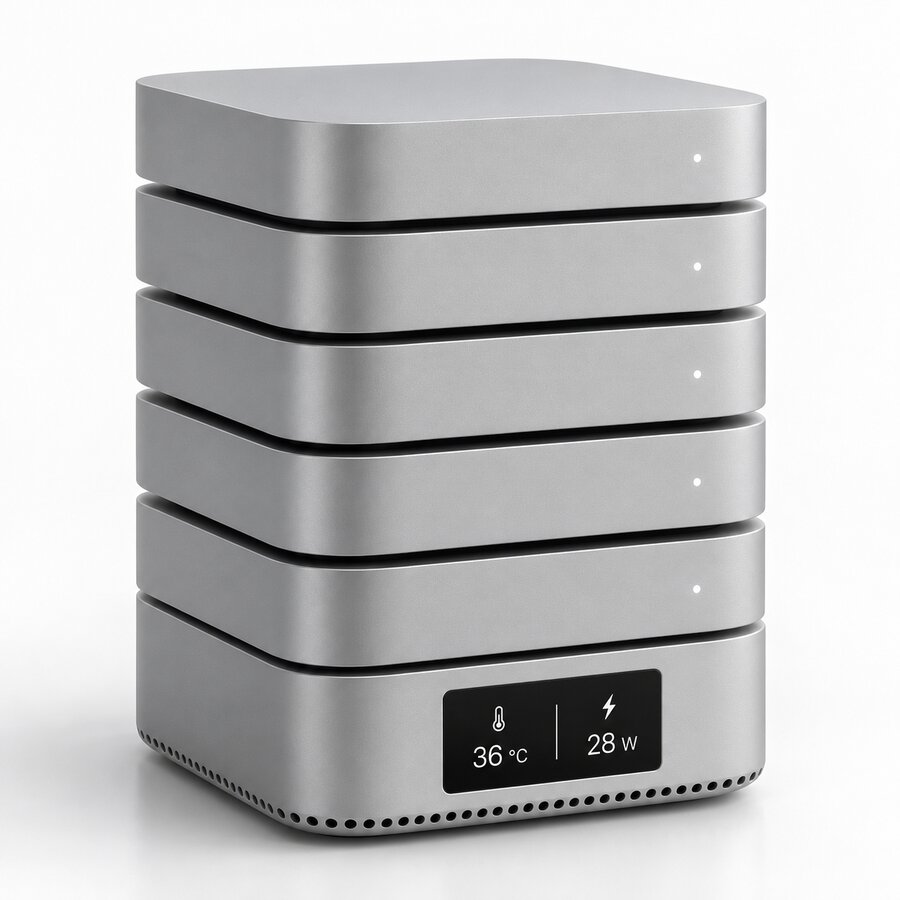
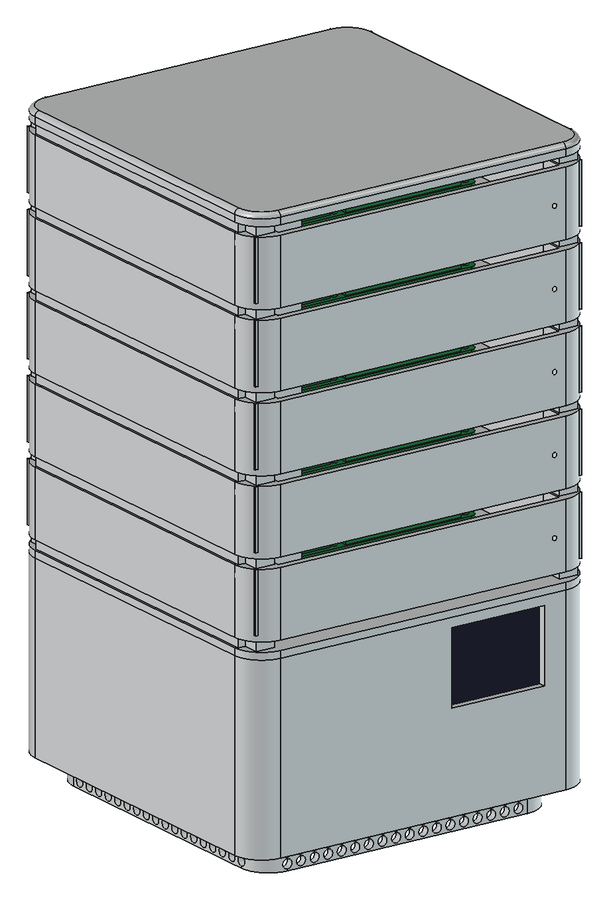
After the Mac mini. Five soft-cornered silver pods, one board in each, on a taller base pod with the power supply, the fans and the screen. The air leaves through the dark shadow line under each pod, and LEDs light those lines. The pods grew from ChatGPT's 125 mm to 150 mm so the base could take the power supply, and the first intake ring was far too small (539 mm²), so it grew to 1,810 mm². The calmest of the five, but the boards are hidden.
P4 Cylinder
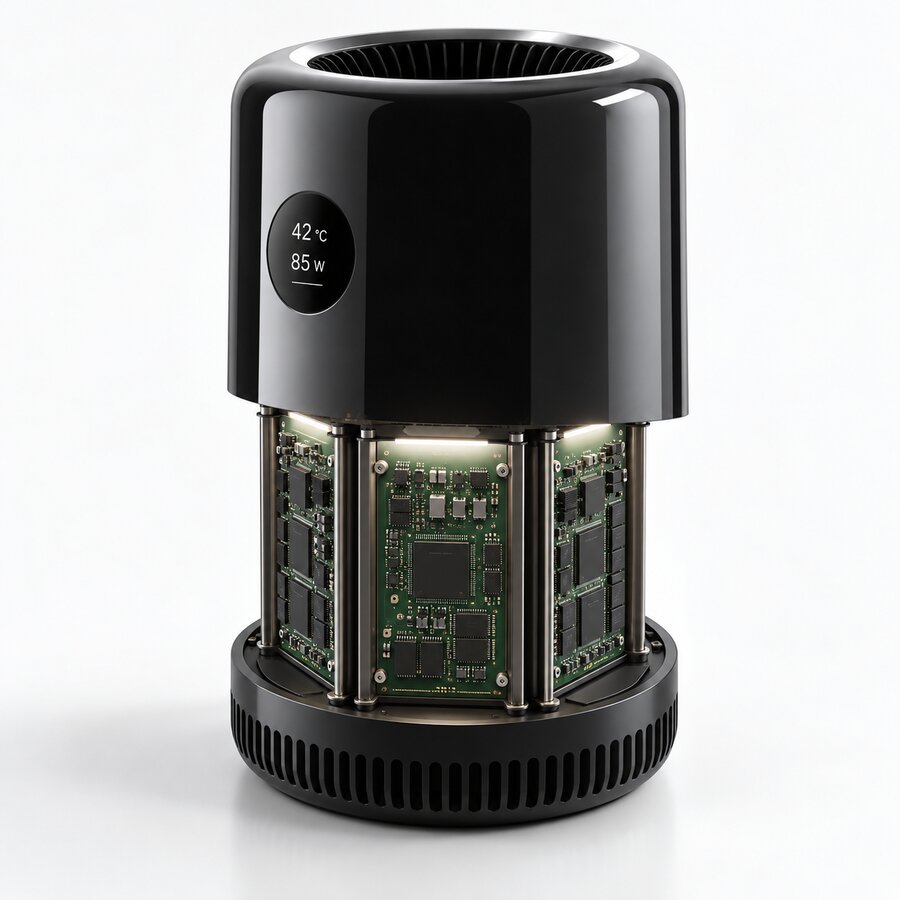
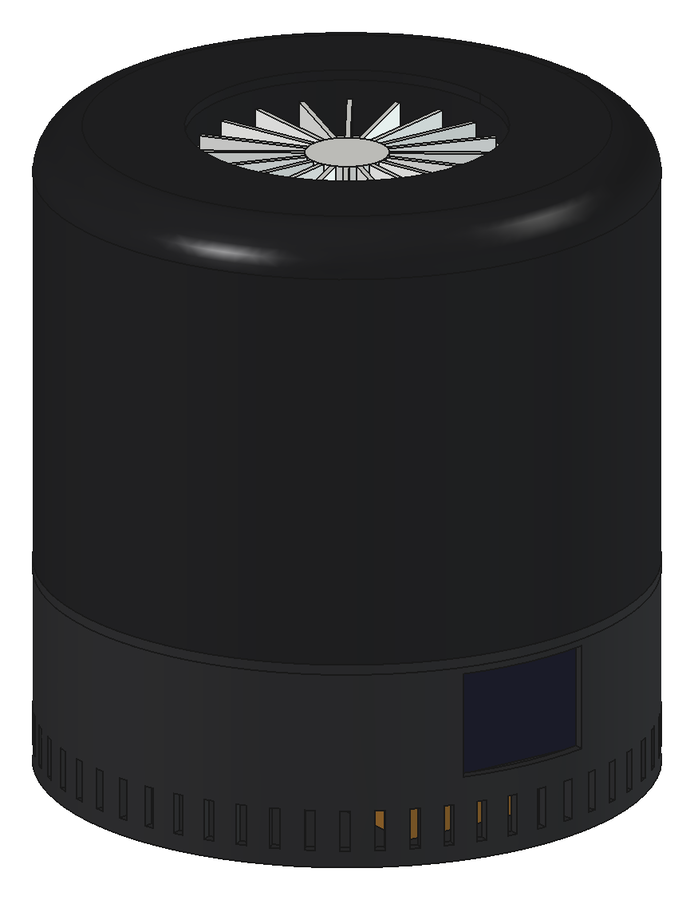
After the 2013 Mac Pro, the bin. C's pentagonal core from round 1 (3.3), a board on each face, under a black shell that lifts straight off. All the air leaves through one round opening on top. The screen is in the base, not on the shell, so the shell lifts off with no cable. It uses the least filament of the five (0.50 kg), but I'd only see the boards with the shell off, and PETG prints satin, so a real gloss means sanding and a clear coat.
P5 Bondi Tower
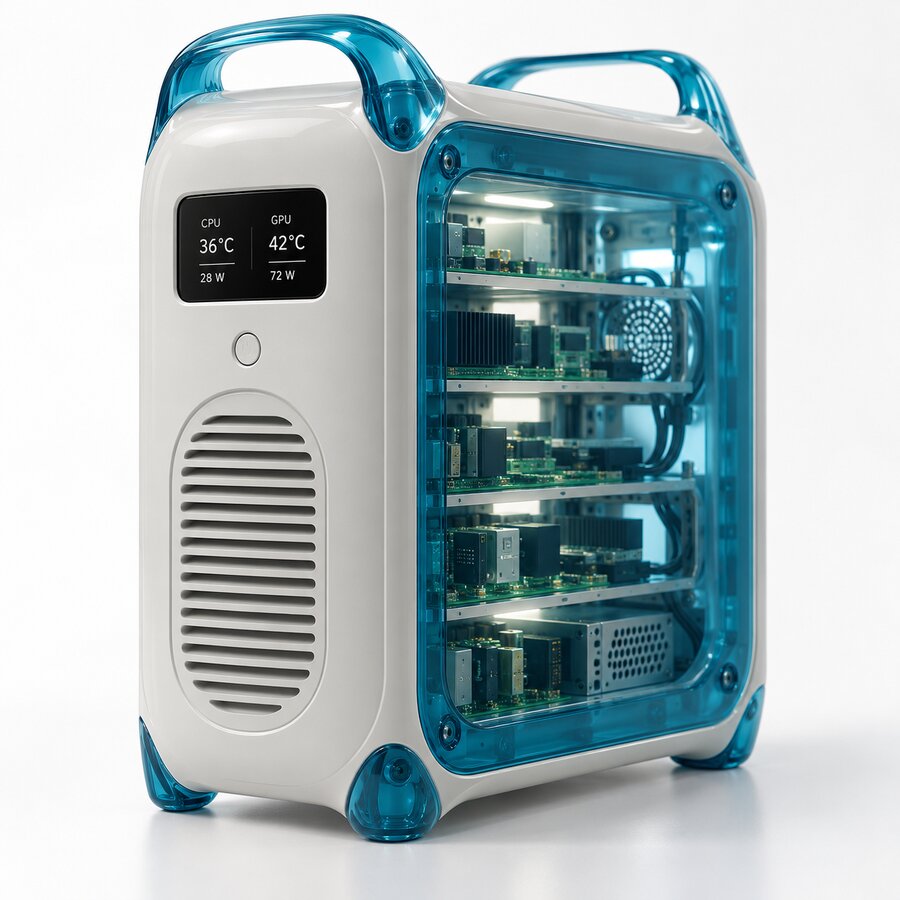
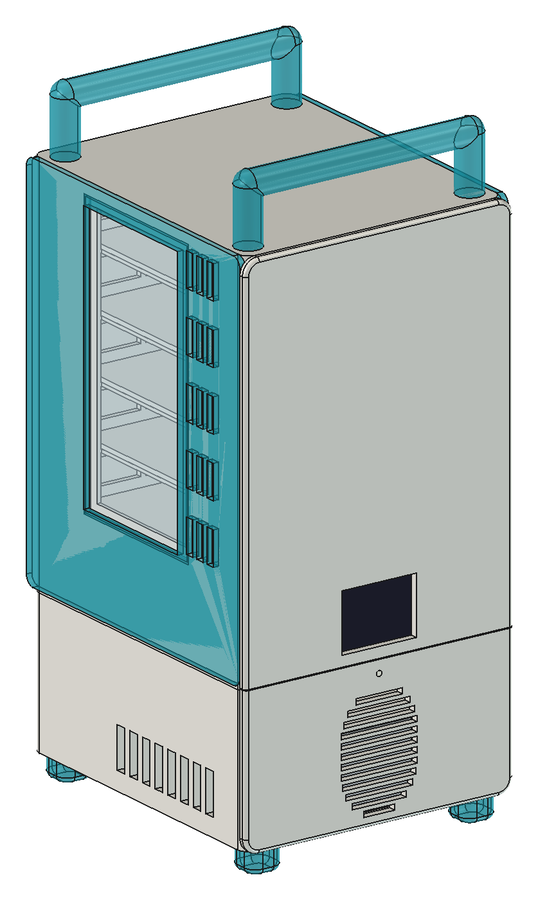
After the blue and white Power Mac G3. A2 in white, with translucent teal side frames, handles and feet. The boards show through the side windows, but at 336 mm it's the tallest of all seventeen designs and the easiest to tip (3.5 N).
The numbers
| P1 | P2 | P3 | P4 | P5 | |
|---|---|---|---|---|---|
| After | 2019 Mac Pro | G4 Cube | Mac mini | 2013 Mac Pro | G3, blue and white |
| Size, W × D × H (mm) | 149 × 189 × 308 | 180 × 180 × 220 | 150 × 150 × 259 | 178 round × 191 | 148 × 172 × 336 |
| Boards seen | Glimpses | Through the sleeve | No | Shell off | Through windows |
| Push at the top to tip it | 3.9 N | 6.7 N | 3.6 N | 6.1 N | 3.5 N |
| Mass, of which printed | 2.10, 1.17 kg | 2.07, 0.63 kg | 1.63, 0.67 kg | 1.43, 0.50 kg | 2.04, 1.03 kg |
Seventeen
That makes seventeen designs that pass every check: A2 and B2, five Neo-Braun, five sysadmin and five Apple. I still have to choose one.