6.6 Architecture
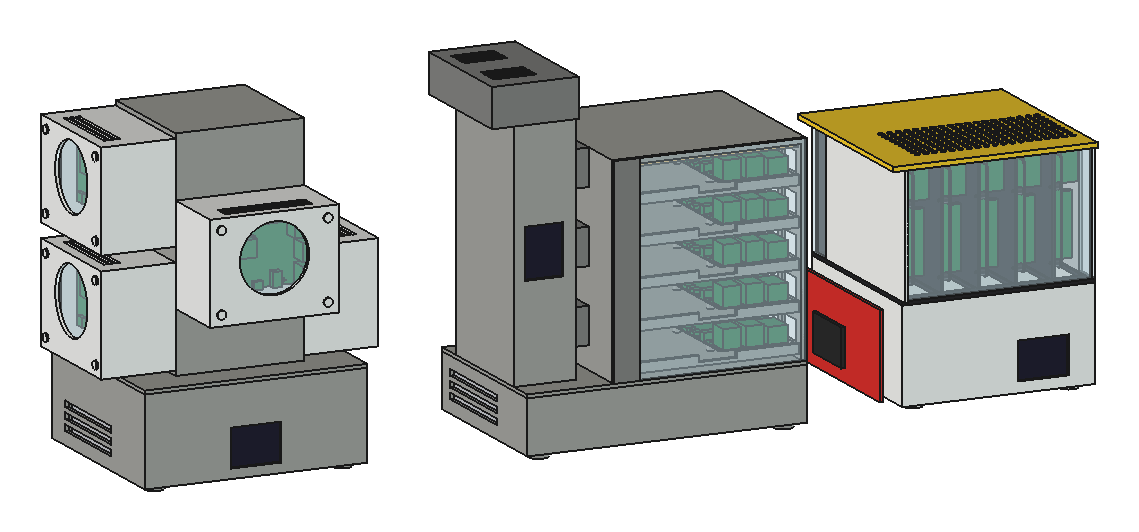
Batch three is buildings, specifically three whose shape comes from how they work.
R1 Capsule
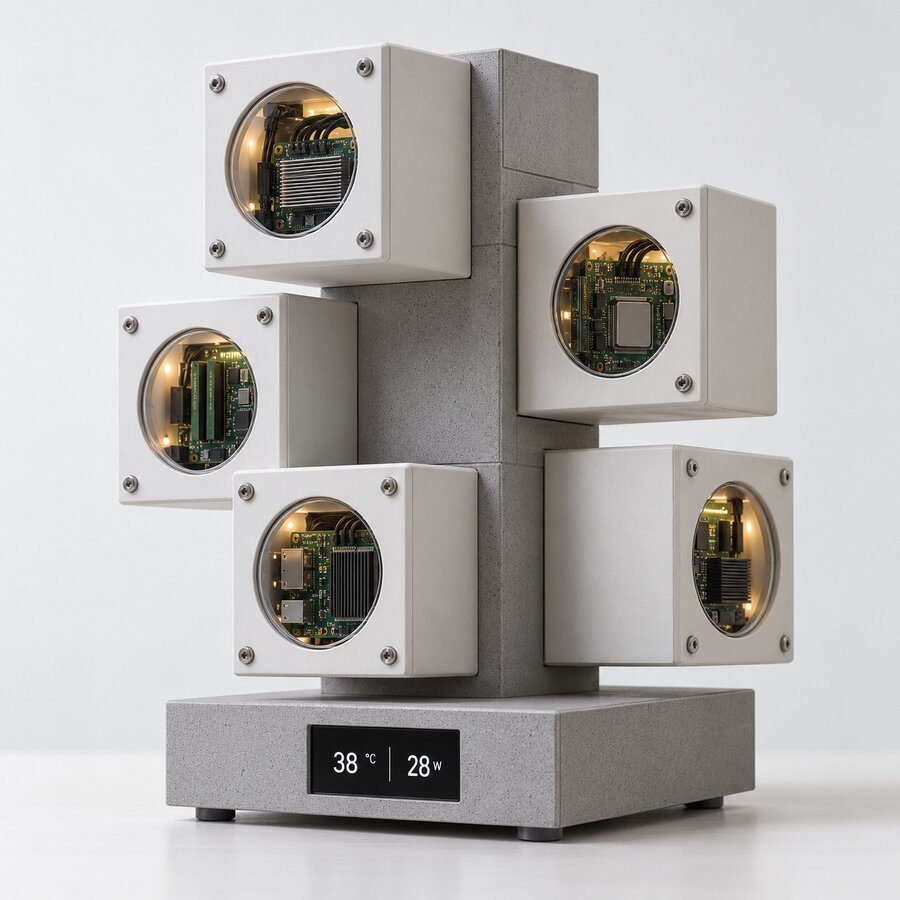
Kisho Kurokawa's Nakagin Capsule Tower in Tokyo (1972) is 140 little rooms, each with one round window, bolted to a concrete core with four bolts so they could be swapped out. That was the whole idea of Metabolism: buildings that change like living things. Nobody ever swapped one, and the tower came down in 2022.
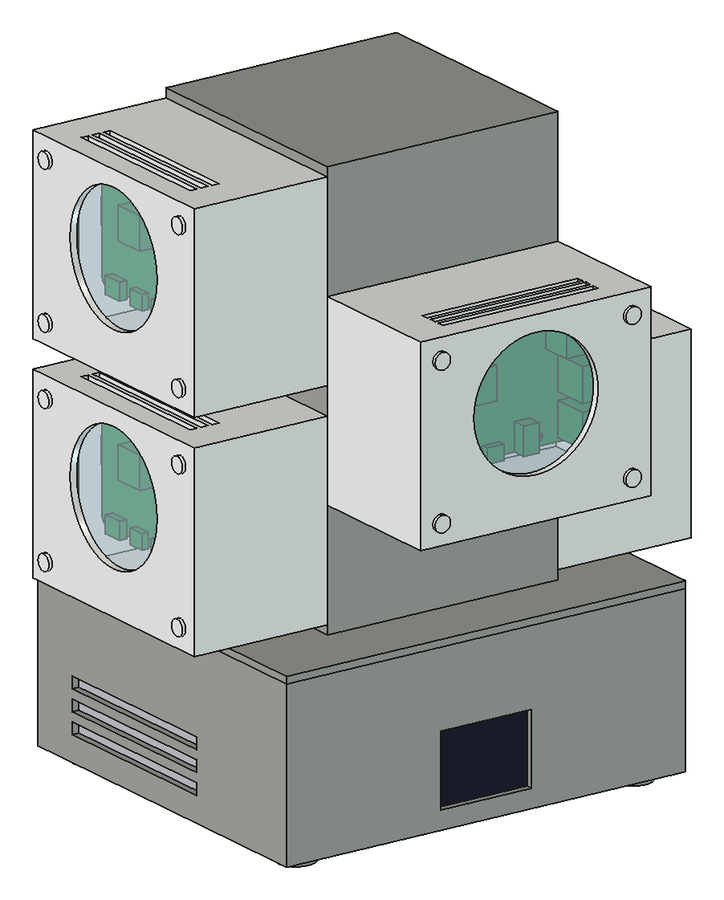
R1 gives each board its own capsule. Five white capsules are bolted to a grey core at three heights, each with a porthole and a board face on behind it. The core is the supply duct: the blowers in the plinth fill it, and each capsule draws its own air through an opening in its back, so they're all in parallel. Swapping a board means undoing four bolts and lifting its capsule off. That's Kurokawa's idea, finally doing a job.
A capsule that shows a whole board face on has to be 104 × 82 mm, so it's chunkier than ChatGPT's small cubes. The capsules are also roomier than the boards need, so the air drifts past them slowly. A baffle would fix that.
R2 Service Tower
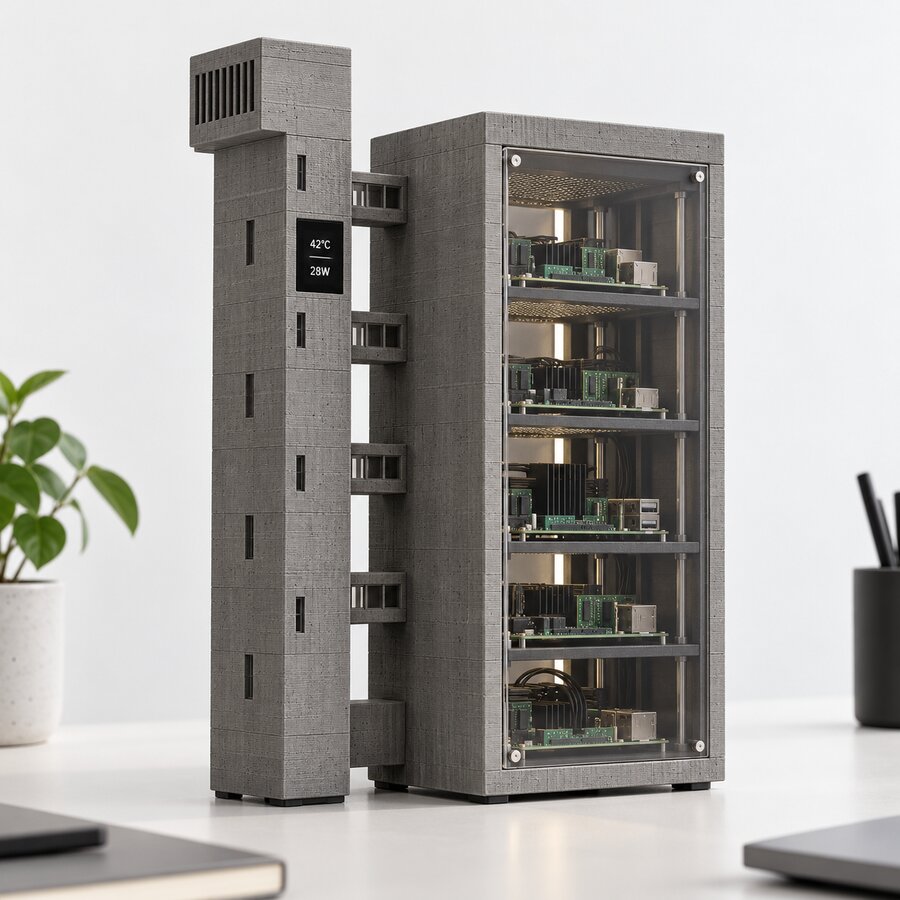
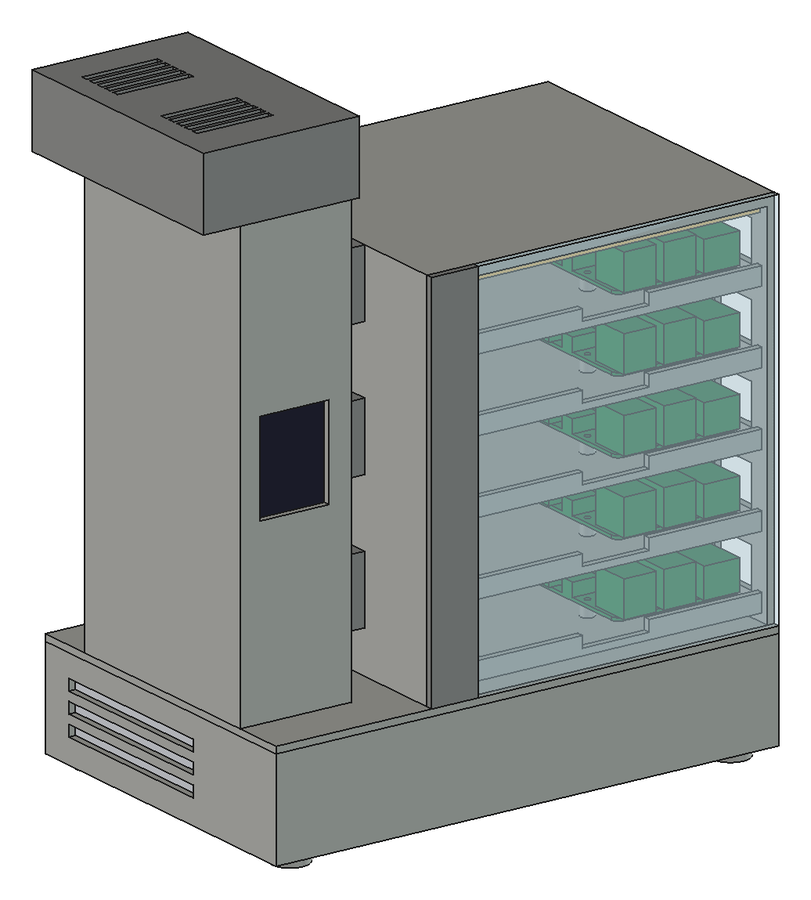
Ernő Goldfinger's Trellick Tower in London puts the lifts, the stairs and the plant in a separate slim tower, linked to the flats by a bridge every third floor, with the boiler house jutting out at the top. The noisy stuff lives apart from the people.
In R2 the noisy stuff lives apart from the boards. Both blowers sit in the jutting crown, drawing air from high up, away from the desk's dust, and blowing it down the slim tower. Three bridges carry it across to the board tower, where each tray takes its share and blows it out of the far side. The screen stands portrait in the slim tower at eye height. It's the best story of the three, but the light crown on top makes it the easiest to tip in the batch (3.3 N).
R3 De Stijl
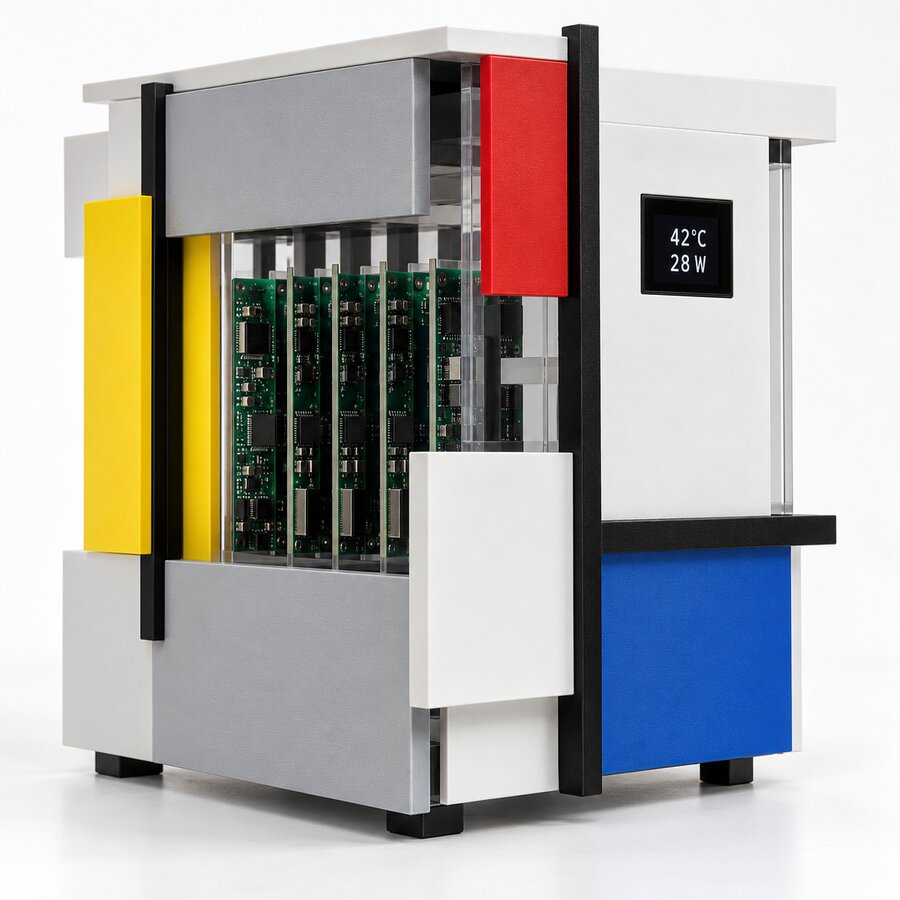
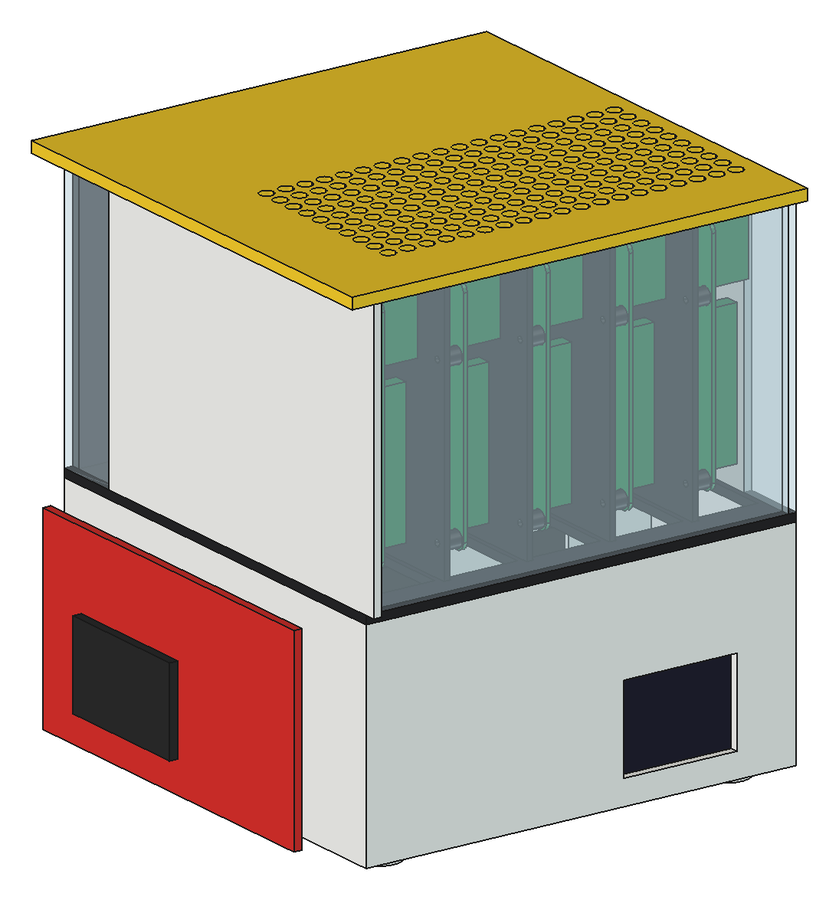
Gerrit Rietveld's Schröder House in Utrecht (1924) is built of separate planes, grey and white, that slide past each other without meeting, with black lines and dabs of red, yellow and blue. It's a Mondrian you can live in.
R3 clads B2's inside in planes that never quite meet. The rule here was that each colour has a job. The yellow roof is the exhaust, full of holes. The red plate covers the mains compartment, with the inlet in it. The blue plane at the back is the intake. The white and grey side walls each overhang a different way, with clear panes filling the gaps, and the black deck edge and blades are the lines. ChatGPT just splashed the colours where they looked good; Claude moved the whole base round so the red mains plate faces the front.
It's the steadiest and lightest of the three.
The numbers
| R1 | R2 | R3 | |
|---|---|---|---|
| After | Nakagin Capsule Tower | Trellick Tower | Schröder House |
| Size, W × D × H (mm) | 227 × 227 × 263 | 246 × 148 × 282 | 188 × 173 × 190 |
| Boards seen | Face on, a porthole each | On trays, through the door | On edge, through the front |
| Push at the top to tip it | 3.9 N | 3.3 N | 4.2 N |
| Mass, of which printed | 1.80, 0.81 kg | 1.79, 0.79 kg | 1.47, 0.48 kg |
Claude's pick is R1, for the capsule-per-board idea. That's twenty-six designs now.