9 Stand v4: the lamp

Stand v3 passed every check I gave it (8.7). It's stiff, it's self-restoring and every part prints. But it still looks like what it is: a bracket on the back of a monitor, a dark hub and a fin. I wanted an object, not a mount. So v4 starts from the look and works back to the structure, where every earlier version did it the other way round.
Looking back first
Before drawing anything new I had every design so far rendered the same way: one capture each, orthographic, shaded with edges, on white, from the angle that shows it best. That's 20 designs in three days: the monitor and the PC models, the two fit gauges, six v1 concepts, v2, five v3 mounts and the four v3 devices.
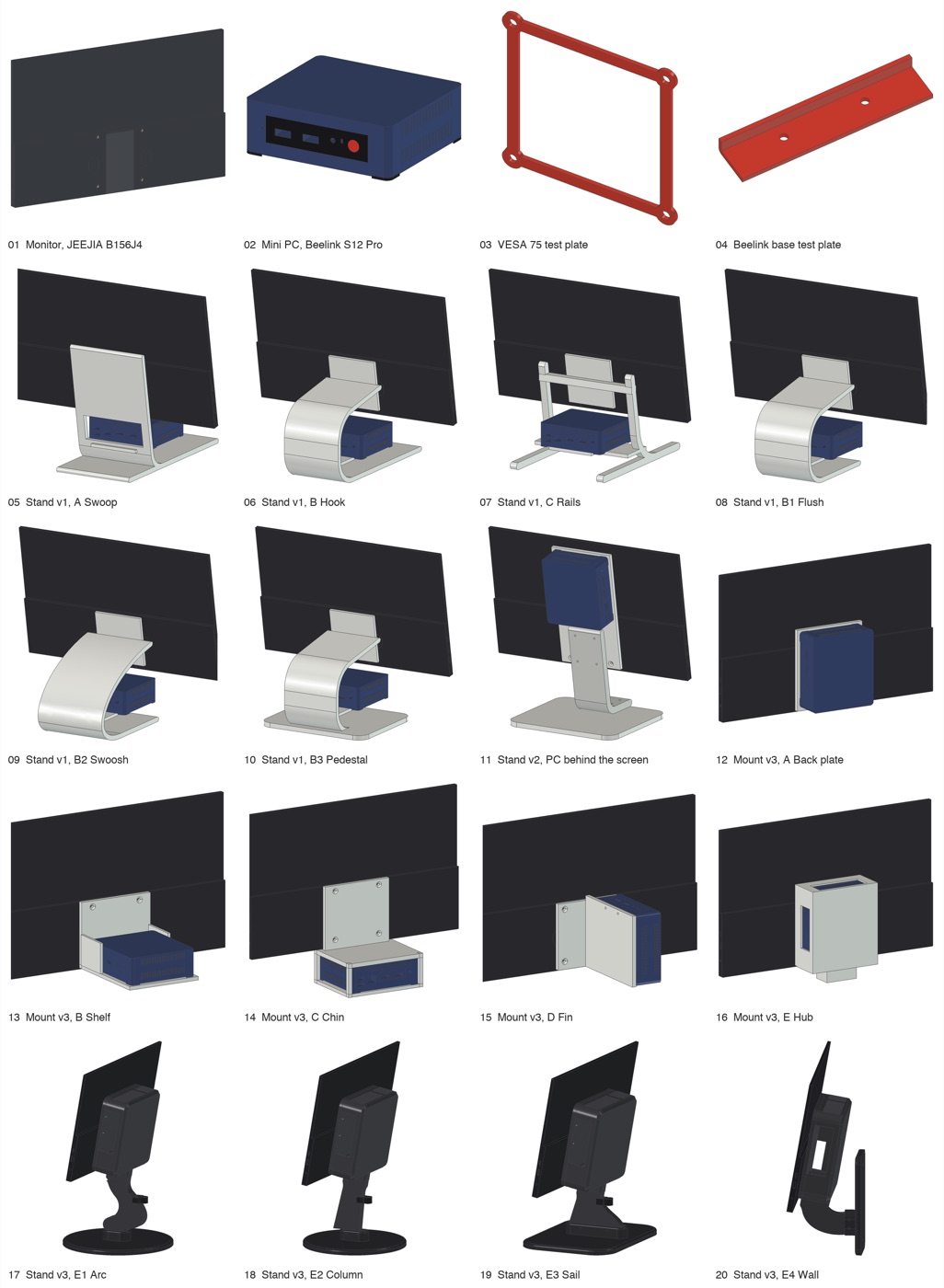
Seen side by side, the pattern is obvious. Each version fixed the structure of the last one: B2's long lever, v2's missing joints, v3's shared dock. None of them is one product. The PC is always a box hung on the screen or tucked behind it, and the stand is always a separate thing that holds the screen up.
The brief
Two ideas:
- A case that goes round the screen as well, so the screen and the stand read as one object.
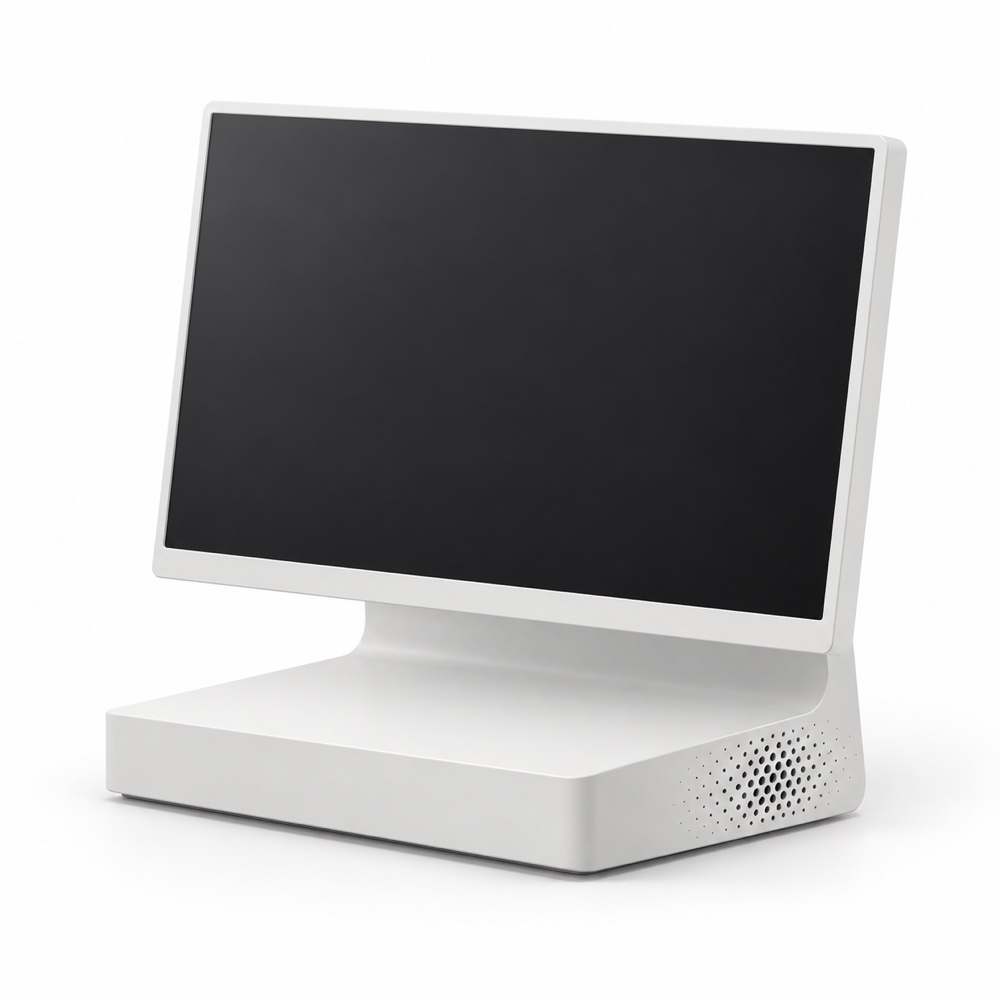
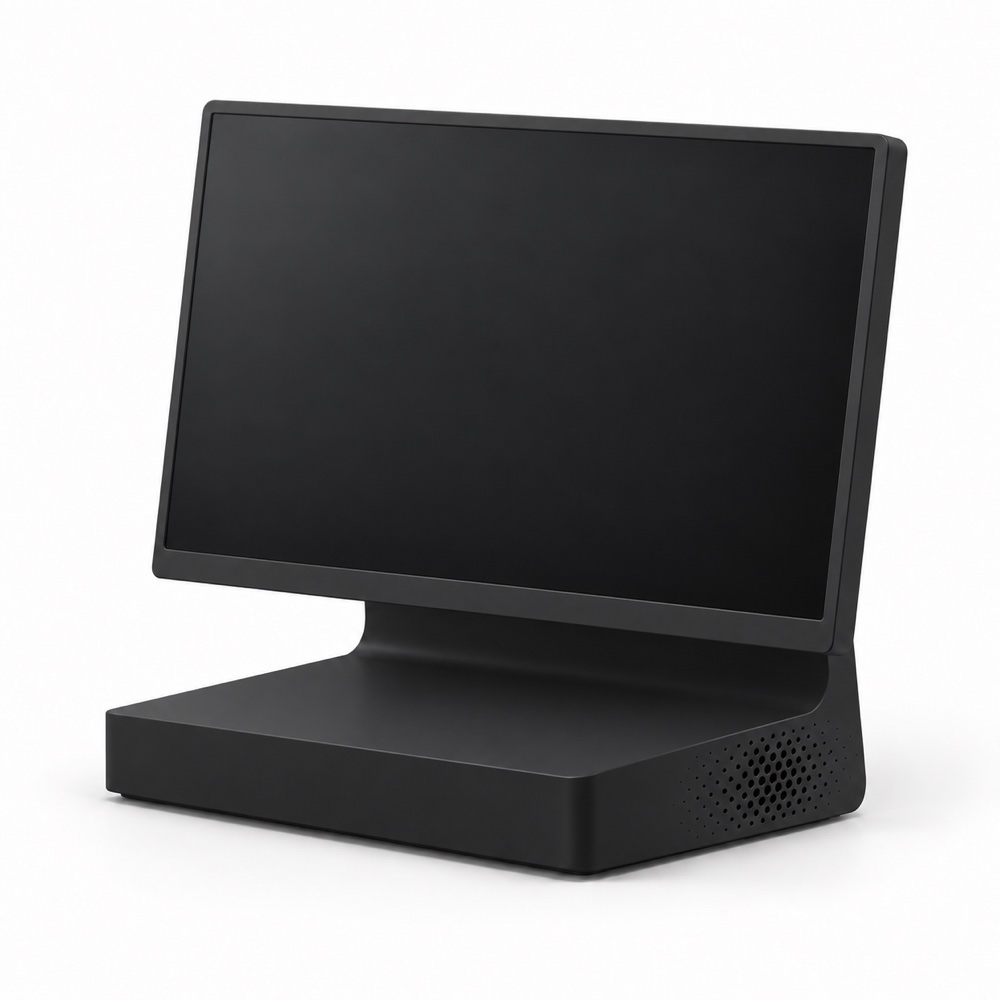
- The PC sits under the screen, in the base. The base is the stand, like a lamp: a heavy foot with the thing you look at above it.
I rendered the reference in ChatGPT, then asked for the same thing in black, which is what I'm building. That's turned out to be a great way to work: ChatGPT renders the idea, Claude realises it in FreeCAD, and I repeat until the two agree.
| Reference | In black |
|---|---|
 |
 |
The approach
The pipeline hasn't changed: FreeCAD driven by Claude Code, a build script and a check script per design, renders from the model, and everything must print on the A1. What's changed is the order:
- Look. Start from the reference and a written design language, so the model has rules to follow and not just a picture (9.1, 9.2).
- Print. Bend the look until every part fits a 256 mm bed in a sensible print orientation.
- Stand. Check fit, clearances and balance with the same checks as v3 (9.3).
The bed bends the look straight away. The case round the screen is 365 mm wide, more than the bed's 362 mm diagonal, so it has to split. I split it on the centre line into two halves. A one-piece base can be about 250 mm wide at most, which is 68% of the case's width. In the reference the base looks nearer 85%. I kept 250 mm in one piece: a slightly chunkier base, no seam across it.
Where it is
A massing model: the shapes, walls, the VESA joint, the PC's place and the halftone are all modelled, and every check passes. The joints between the body's parts, the feet and the cable route from the screen aren't designed yet. The weak point is balance: a push of 4.2 N at the top of the screen tips it over backwards, less than v3's 5.1 N. I'll deal with that in the next design iteration.